Empty bins in JennAir ice makers usually trace to supply, temperature, or harvest mechanics—not mystery. Safe checks stay outside sealed refrigeration.
When a JennAir ice maker makes little or no ice, the problem is usually cold, water or the harvest cycle. Check that the maker is switched on and the bin is seated, that the freezer is cold enough, that the water supply is open and that the filter is not overdue. If those checks pass and trays stay empty, book service.
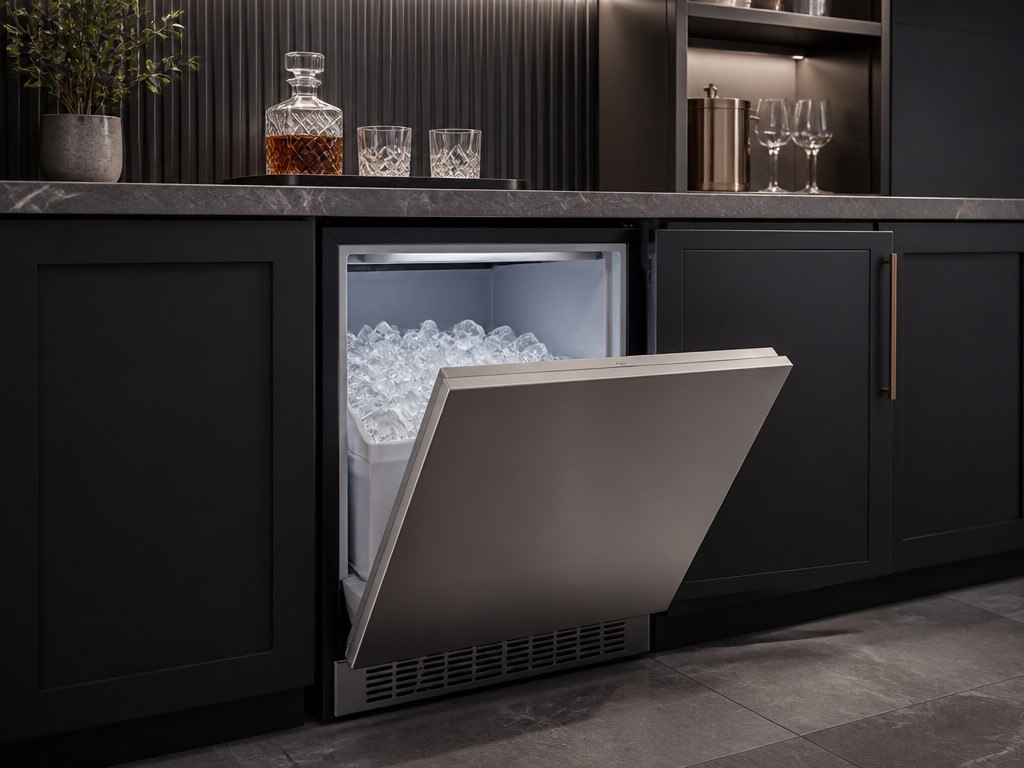
Built-in ice makers hide inside column freezers or dedicated ice compartments. When cocktails lose their clink, the failure is almost always a process that stopped mid-cycle—not instant death.
Ice production needs cold enough freezer temps, water supply, and a harvest mechanism that releases cubes on schedule. Weakness anywhere reads as an empty bin.
Because a maker cycles slowly, a short wait tells you little. The better approach is to change one condition, give it time and watch what changes.
Freezer sections warmer than roughly 10°F slow or stop production even when the refrigerator feels fine. Door gaps and heavy frost are common culprits in columns.
Water filters and supply valves restrict fill when clogged—makers click without filling or produce hollow shells.
Harvest motors and ejector arms jam when cubes bridge; the maker thinks it is full when the bin is actually empty.
The manufacturer’s ice maker troubleshooting names four common causes: a restricted water supply, freezer temperature, the ice maker being turned off, and water filter problems. That is a short checklist, and it covers most of what an owner can check from the outside.
On the supply side, the guidance is to make sure the line is securely connected, the valve is fully open and the line is not kinked, and to avoid pushing the refrigerator so far back that it pinches the line. For freezer temperature, the page gives a setting range of 0 to 5F (-17 to -15C).
| Clue | Likely cause | Owner check |
|---|---|---|
| Click, no water sound | Supply or valve | Confirm filter age; valve open |
| Ice stuck in mold | Harvest failure | Do not pry with metal tools |
| Small or hollow cubes | Fill time or pressure | Replace filter if overdue |
Verify the ice maker switch is on and the bin is seated to depress the feeler arm or optic sensor.
Replace water filters on schedule per manual—owner-friendly and high impact.
The same guidance suggests a simple way to test the filter. Remove it and try dispensing water; if water comes out, the filter had been installed incorrectly. The manufacturer also says to replace the water filter every 6 months, when the indicator comes on or as needed.
Safe to try
Leave to a technician
One case surprises owners. If an ice maker is left on with no water line connected, the manufacturer says it can cause buzzing, an overly cold refrigerator, frozen food in the crisper and an overly cold freezer. That is a reminder that the maker’s switch matters and that a unit with no supply should have its ice maker off.
A maker that fills but harvests poorly points toward the cycle and the mold, while a maker that clicks without filling points to supply. A freezer that is warm points to cooling issues rather than the maker. None of these results proves a part is bad, and the exact model matters because the layout of the maker varies.
After moving bins for party ice, optic sensors stay off until bin reseats—a silent pause mistaken for breakdown.
Gradual decline over months fits filter restriction; sudden stop after outage fits valve or control topics.
After filter and temp checks, leave the maker on overnight. Less than one tray in twelve hours at proper temps warrants service—not more resets. Record the result of the night before you change anything else.
We measure fill volume and time, test valve coils, verify harvest thermistors, and inspect module motors—without piercing refrigerant lines.
Column installs get door seal checks because warm freezers masquerade as maker failures.
Ice is a habit of cold, water, and timing. Tune freezer temps and filters first; call when trays stay empty through a cold night.
A bin that is not seated can leave the maker waiting, since the unit may sense the bin position. Reseat the bin, then give the maker time to resume.
The manufacturer’s guidance for its refrigerators is every 6 months, when the indicator comes on, or as needed. Your manual gives the schedule for your model.
Set the freezer within the manufacturer’s range of 0 to 5F (-17 to -15C) and give it time to settle. A freezer that stays warm needs attention before the maker is blamed.
If the model has no reset button, the manufacturer says to unplug it for one minute and plug it back in. Do that once, not repeatedly.
Official manuals and support notes are available on JennAir owner support.
Write down the full model number before ordering parts. Board and sensor revisions can change which part number is correct.
A single power reset can clear a temporary fault, but repeated returns of the same code usually mean a physical cause remains.
Keep vents and filters clear between visits. Restricted airflow often mimics electrical or sensor failures.
If water, burning smells, or sparking are present, stop using the appliance and arrange a professional inspection.
Often twelve to twenty-four hours for first full batch.
Yes—turn back on and discard first harvest if stale taste concerns you.
Indirectly if freezer warms from door or frost issues.
Brief motor noise yes; grinding metal no.
What to Expect During a JennAir Appliance Diagnostic Visit should be handled as a sequence of questions. Each safe check should confirm…
Continue readingJennAir Error Codes: How to Read F and E Codes Safely should be handled as a sequence of questions. Each safe check…
Continue readingA focused diagnostic visit on JennAir built-ins saves time and repeat trips. A little preparation turns an hour on-site into answers—not another…
Continue readingShare a few details and we’ll confirm an appointment. Prefer to talk? Call us and we’ll help right away.