What to Expect During a JennAir Appliance Diagnostic Visit should be handled as a sequence of questions. Each safe check should confirm or eliminate one condition while preserving codes, model information, and the…
At a JennAir diagnostic visit, the technician listens to the symptom, looks at the installation, narrows the problem to one system, and tests it. The findings are explained to you before any repair is approved.
A JennAir diagnostic visit exists to answer two questions: which system has actually failed, and does the proposed repair fit your exact model. It goes best when the technician starts from a clear symptom and a readable model label instead of from guesses or half-finished resets. Leave the appliance installed and in the state it was in when the problem appeared.
What to Expect During a JennAir Appliance Diagnostic Visit should be handled as a sequence of questions. Each safe check should confirm or eliminate one condition while preserving codes, model information, and the original symptom for model-aware diagnosis.
Do not change several conditions at once. If power is reset, settings are changed, filters are cleaned, and the appliance is moved in the same attempt, the evidence becomes harder to interpret.
| What you see | What the visit works out | What you can safely do first |
|---|---|---|
| Display is dark or unresponsive | Whether power reaches the appliance and whether the control responds at all | Check for an active control lock, then look at the household breaker or outlet only where it is safe to do so |
| Appliance runs but results are off | Whether the appliance, the installation, or the way it is loaded is behind the drift | Review settings, clearances, and loading against the use-and-care manual |
| Problem comes and goes | Which conditions bring it on, since a symptom that will not repeat cannot be tested directly | Keep a short log of when it happens and avoid repeated resets |
| A code appears | Which platform and model the code belongs to | Keep the code together with the complete model number, because the same format can show up on different appliance types |
JennAir spans multiple premium appliance families, so a generic brand-only answer is often too broad. Model number, appliance type, installation, and the exact symptom are the minimum context needed before technical information is applied. Models and error codes are repair references, not shopping catalog content.
Change one condition at a time and record the result. Confirm the operating state, compare a related function that still works normally, perform one safe external check, and reassess. If the symptom remains, preserve codes and model information instead of stacking resets or guesses.
Good diagnostic preparation saves time. A readable model label, exact symptom, photos of codes, and a short timeline let the technician skip generic questions and start with model-specific tests.
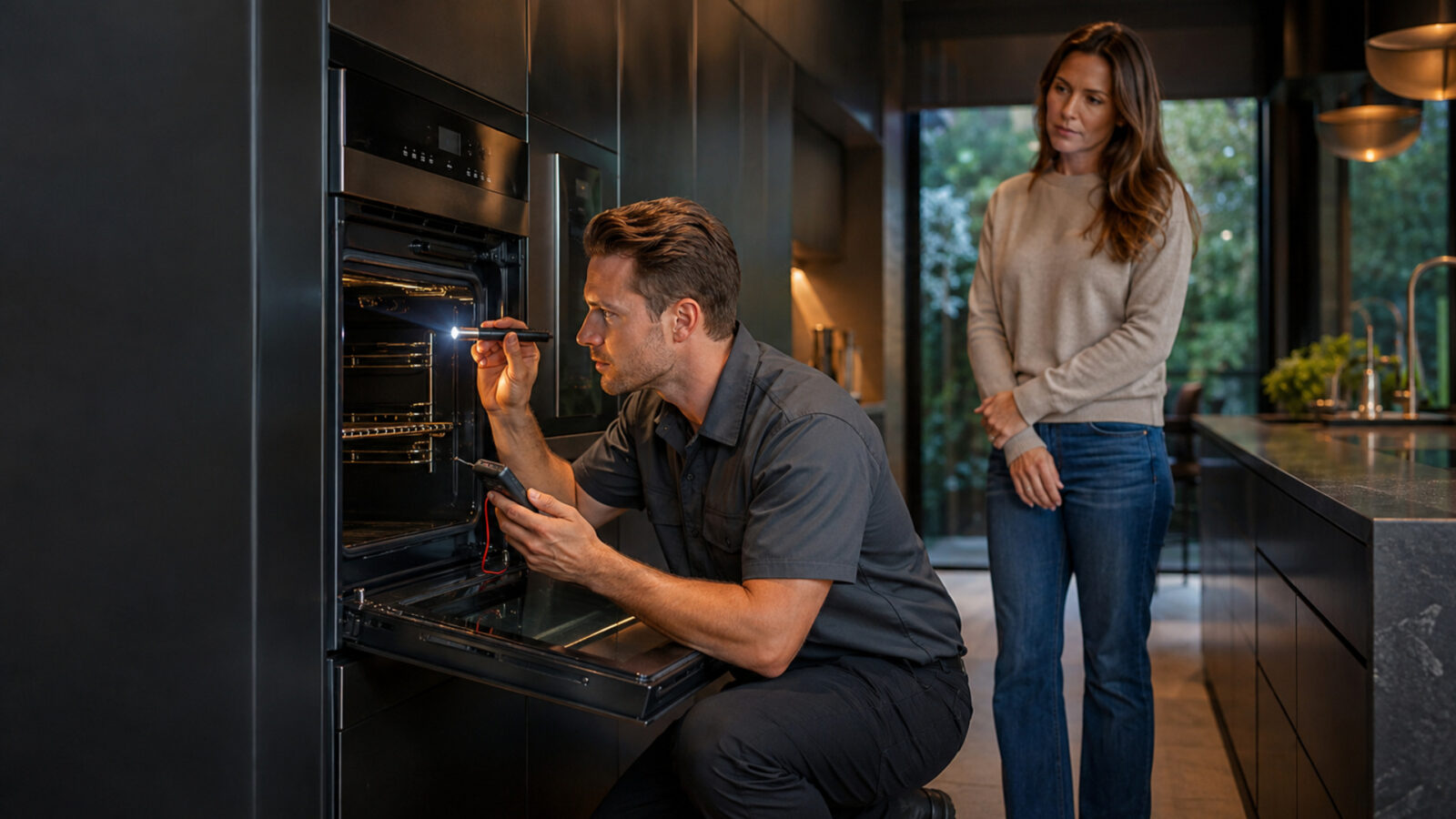
A visit generally follows a simple arc. The technician listens to the symptom, looks at the installation, narrows the problem to one system, tests that system, and then explains what was found before any repair is approved.
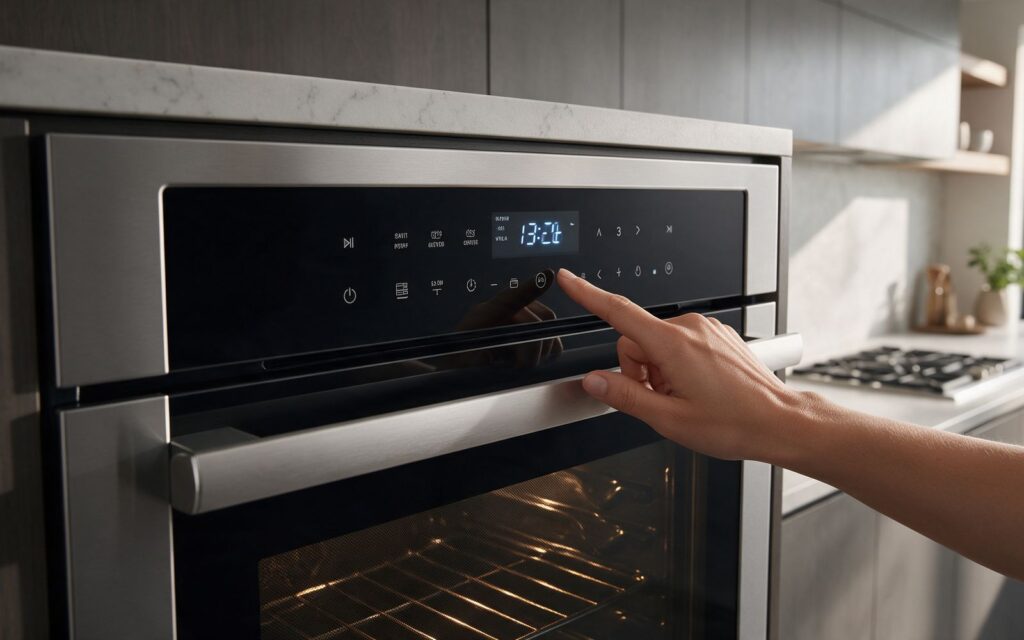
Some early questions concern the setup rather than the appliance. A control lock, a special mode, a tripped breaker, or a closed water valve can look like a failure, and ruling those out keeps the visit focused. The manual for several JennAir models describes a control lock that must be released before the controls respond.
A good diagnostic visit should reproduce the symptom or use your observations to select a narrow test path. Depending on the appliance, that may mean comparing temperature or sensor readings, checking a fan or pump command, confirming water flow, evaluating ignition behavior, reading stored diagnostics, checking control output, or proving that the external installation and utility conditions are normal.
The goal is not to replace the most commonly mentioned part. The goal is to identify the failed system, confirm that the proposed repair matches the exact model, and explain what work is inside the appliance repair scope.
Leave built-in, panel-ready, or tightly fitted JennAir appliances installed unless the service team specifically asks for access. Unplanned extraction can disturb cabinetry, panels, flooring, gas, water, drain, ventilation, or electrical connections and create a second problem.
If the appliance is integrated, provide access information when booking: custom panels, service elevators, gated entry, parking/loading limits, unusual cabinet clearances, or adjacent appliances that restrict service access.
Write down the complete JennAir model number, the exact symptom in one sentence, when it began, whether it is constant or intermittent, what related function still works normally, and any displayed code, message, light pattern, or alarm before power is reset. Also note recent power, water, gas, drain, ventilation, cleaning, filter, or installation events.
These details often reduce duplicate owner-level checks and help the technician arrive with a better model-specific starting point.
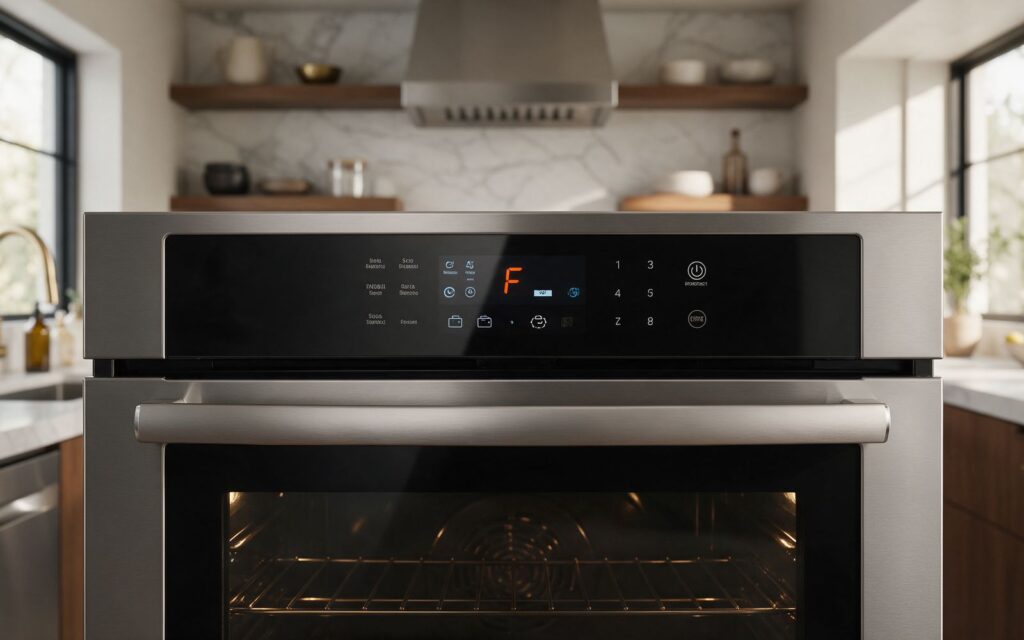
Do not clear codes before documenting them. Do not order a part because another JennAir owner reported a similar symptom. Do not apply one code meaning across unrelated appliance families. The site technical library must keep appliance/model context, especially for F/E-style codes that can appear on different platforms.
Avoid internal electrical testing, gas-pressure work, sealed-refrigeration work, safety-device bypassing, or microwave cabinet removal. Those steps require proper service information, tools, and training.
A diagnostic visit can confirm which system failed and whether the fault sits inside the appliance or in its supply, venting, or installation. It cannot always reproduce a symptom that only appears under particular loads or after a power event, and in that case the findings may point to a narrow set of possibilities instead of a single part.
Before approving work, ask what was tested and whether the repair depends on a part matched to your model.
It depends on the type. On JennAir’s Product Help pages, the wall oven plate is on the right mounting rail, the dishwasher label is on the tub frame, and the warming drawer plate sits above the left receiving slide with the drawer removed.
The technician can still test the likely systems and use your description of when it occurs.
Keep a record of it before any reset. Codes can mean different things on different platforms, so the code is only useful alongside the exact model.
For adjacent symptoms, read JennAir Error Codes: How to Read F and E Codes Safely and Where to Find a JennAir Model and Serial Number Before Maintenance or Service. The JennAir error-code directory and JennAir model directory should be used when the exact code/model context is known.
If the live production route differs from the route above, preserve the working existing slug and map the link to that URL rather than creating a duplicate page.
Use one normal manual-approved restart when appropriate. Record any code or message first. If the same symptom returns, repeated resets are not a repair.
Usually no. Similar symptoms can come from different components, installation conditions, or external utilities.
No. Keep homeowner checks external and model-appropriate.
Yes. JennAir has multiple product generations and appliance families. The same symptom or code can require a different diagnostic path on another platform.
JennAir Error Codes: How to Read F and E Codes Safely should be handled as a sequence of questions. Each safe check…
Continue readingA focused diagnostic visit on JennAir built-ins saves time and repeat trips. A little preparation turns an hour on-site into answers—not another…
Continue readingAfter a blackout, JennAir built-ins may show blank displays, lock icons, or fault codes. A calm reset sequence protects logic boards and…
Continue readingShare a few details and we’ll confirm an appointment. Prefer to talk? Call us and we’ll help right away.