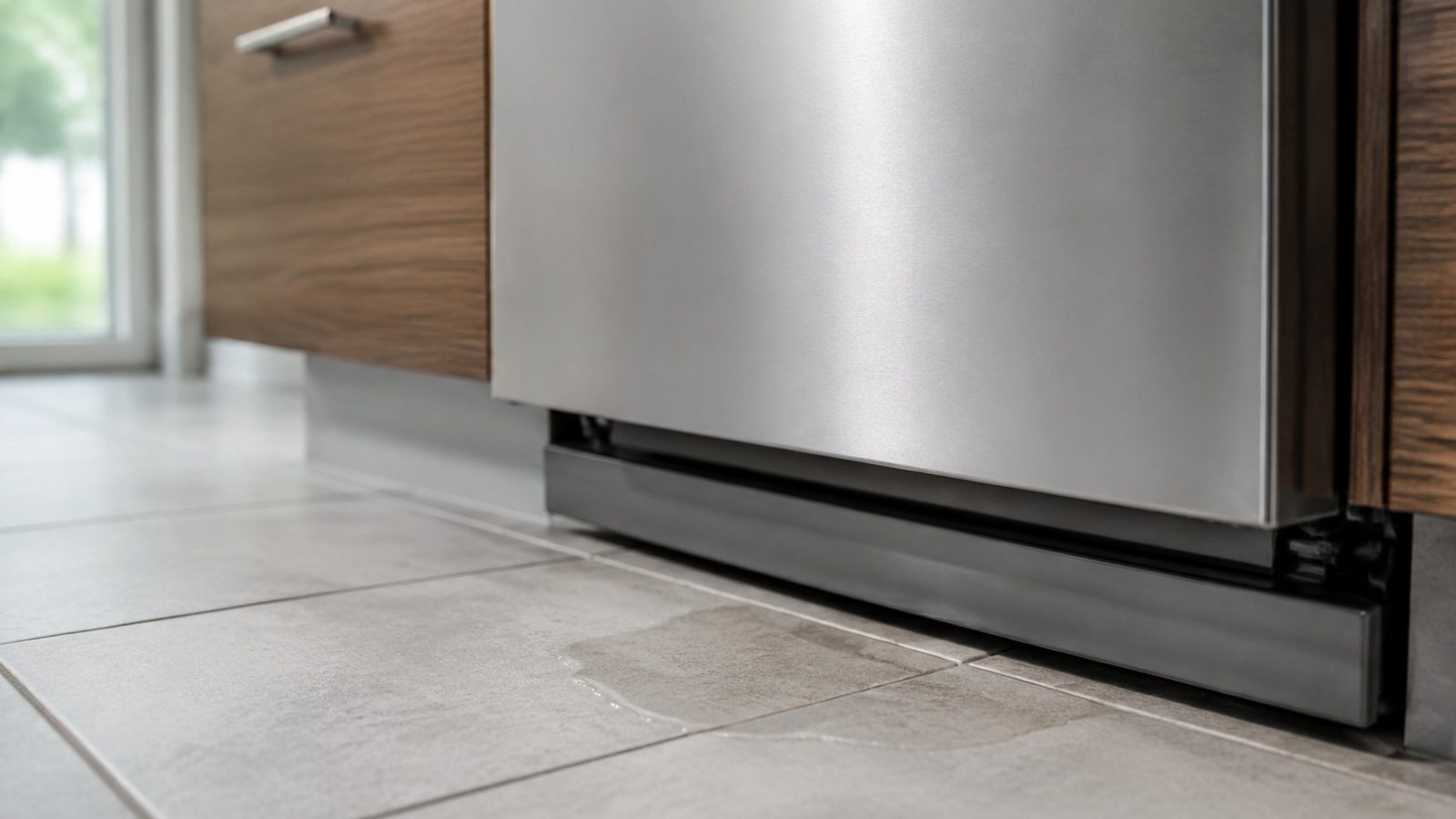
A leak from a panel-ready JennAir dishwasher demands quick floor protection. Learn whether the water is door, hose, or pump related before damage spreads.
Water at the door or toe-kick of a JennAir dishwasher usually traces to the door gasket, an overfill from suds or the inlet valve, or a seal or connection at the pump or hoses. Where the water appears is the best clue. Stop running the dishwasher while you work it out, and book service if the leak continues after the gasket and leveling are dealt with.
Integrated dishwashers sit flush with cabinet runs—water that escapes the tub finds hardwood before anyone notices a drip sound.
Leak sources cluster at the door gasket, under-door plastic trough, inlet connections, and pump seals. Color and timing narrow the list faster than guesswork.
Door leaks often appear mid-cycle when spray hits a gasket that lost elasticity or a door that sits slightly proud of adjacent panels.
Toe-kick leaks may be clear wash water from an overfill or suds condition, or dark seepage from pump seal weep—different urgency, different repair. The product help also lists an inlet valve that sticks open as a cause of overfill, which can look like a toe-kick leak even when no seal has failed.
Under-sink inlet hoses on hard-plumbed luxury kitchens can weep at ferrules when the dishwasher rocks on its mounts during heavy wash phases.
| Leak site | Water character | First response |
|---|---|---|
| Door front | Soapy spray mist | Stop cycle; inspect gasket and door alignment |
| Toe-kick left | Sudsy overflow | Use correct detergent amount; cancel cycle |
| Under sink | Drip when filling | Shut dishwasher water valve; check fittings |
JennAir names five leak sources: the door gasket, an inlet valve sticking open and overfilling the tub, a float that does not move freely, the seal at the pump, diverter, or motor shaft, and loose connections. Location narrows them. Front and door-area water points toward the gasket, over-sudsing, or a spray arm hitting the door. Bottom front center suggests a pump seal, the sump, or overfill. Water behind or under the cabinet points toward hoses, the inlet valve, or the drain line.
Shut power at the breaker if water approaches outlets or the motor area. Towels and a shallow pan at the toe-kick buy time without moving the unit.
Do not operate a dishwasher that dumps water every fill—pump seal failures worsen with run time. The product help is explicit that the dishwasher should not run during an active leak.
Safe to try
Leave to a technician
Two basic conditions come first. The dishwasher should be level side to side and front to back, and only dishwasher detergent belongs in it; dish soap creates suds that can push water out. Check your manual for how leveling is done on your model.
Some models have a Leak Detection System. When it triggers, a light on the front flashes and the tub drains. That response is the dishwasher protecting the floor, so the cause still needs finding.
Sudsy leaks follow the wrong soap or rinse agent—often after a well-meaning switch to hand-wash liquid. The foam exits anywhere it can, including the door vent.
Non-sudsy seep after drain phase suggests pump or hose integrity issues needing hands inside the machine.
When a custom panel is screwed too tightly to the door, latching pressure distorts the gasket—leaks appear even with a healthy seal on paper.
The product help says to call for service if the inlet valve is failing, the tub keeps overfilling, the tub is cracked, or leaks continue after the gasket has been replaced and the dishwasher leveled. Do not run the dishwasher during an active leak.
We run fill and wash tests with the toe-kick removed for sight lines, dye-check pump areas, and inspect float and overfill switches before condemning tubs.
Integrated installs get leveled and shimmed to stop inlet hose stress.
Leaks punish slow reactions. Stop the cycle, protect floors, and match the water story to door, suds, or plumbing before hidden cabinet damage compounds.
Water at the front often means a worn door gasket, too many suds, or a spray arm hitting the door. Clean the gasket area and confirm you used dishwasher detergent before suspecting anything else.
Bottom front center can indicate a pump seal, the sump, or an overfill. If the tub keeps filling too much, stop using it and book service.
On models with a Leak Detection System, a flashing front light with a draining tub is the system responding to water. Check your manual for your model’s behavior.
Official manuals and support notes are available on JennAir owner support.
Write down the full model number before ordering parts. Board and sensor revisions can change which part number is correct.
A single power reset can clear a temporary fault, but repeated returns of the same code usually mean a physical cause remains.
Keep vents and filters clear between visits. Restricted airflow often mimics electrical or sensor failures.
If water, burning smells, or sparking are present, stop using the appliance and arrange a professional inspection.
No—small leaks reach subfloors quickly in built-in runs.
Some models yes; confirm part fitment with model number first.
Yes—twist stresses door alignment and hose runs.
Policies vary; document immediately.
What to Expect During a JennAir Appliance Diagnostic Visit should be handled as a sequence of questions. Each safe check should confirm…
Continue readingJennAir Error Codes: How to Read F and E Codes Safely should be handled as a sequence of questions. Each safe check…
Continue readingA focused diagnostic visit on JennAir built-ins saves time and repeat trips. A little preparation turns an hour on-site into answers—not another…
Continue readingShare a few details and we’ll confirm an appointment. Prefer to talk? Call us and we’ll help right away.