
When a JennAir wall oven or column refrigerator flashes a fault code, the number is a breadcrumb—not a verdict. Learn how to read it safely before a reset wipes the trail.
Built-in JennAir appliances speak in brief alphanumeric bursts on the touch display or hidden service panel. A code that appears mid-roast or during a defrost cycle is the appliance trying to name a subsystem that lost confidence in itself.
Our shop is independent—not manufacturer-authorized—yet we rely on the same first step every visit: photograph the code, note what was running, then decide whether a simple power cycle helps or hides a repeat failure.
Most JennAir codes fall into two families: E codes (electronic control or sensor disagreements) and F codes (functional failures such as door lock, cooling, or ignition paths). The display may show them once, blink them, or lock controls until acknowledged.
In a paneled kitchen, codes often surface after a power blip, after a long self-clean, or when a door switch fails to report fully closed. The code rarely tells you which wire—only which circuit stopped cooperating.
Clearing a code without context is like erasing a check-engine light before a road trip. Safe troubleshooting starts with capture, then correlation with recent use.
| Code pattern | Typical subsystem | What to record first |
|---|---|---|
| F9 / door-related | Latch or lock motor | Was self-clean running? Any obstruction? |
| E or F with cooling | Evaporator fan / thermistor | Freezer temp, frost pattern, recent door left open |
| Blinking display only | UI or power supply | Breaker label, other appliances on same circuit |
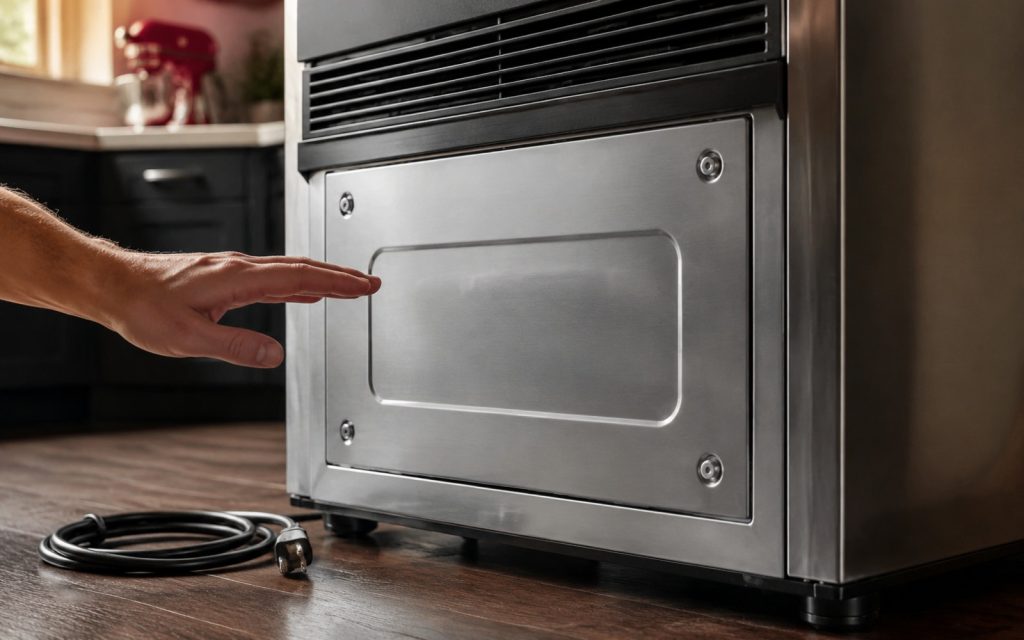
You can gather useful evidence without opening sealed panels or touching line voltage. Treat the display as read-only until you have notes.
If the appliance is actively smoking, sparking, or smelling of hot plastic, stop and shut power at the breaker—do not chase codes first.
Safe to try
Leave to a technician
A code that appears once after a storm and never returns often reflects a brownout on a shared kitchen circuit. A code that returns every third bake points to a thermal switch or latch wearing out.
Panel-ready installations add another layer: a slightly proud custom panel can prevent a latch from seating, producing door codes that look electronic but are mechanical.
If the same code returns twice within a week after breaker resets, further resets only delay a proper test. Schedule diagnosis before hidden heat or cooling damage spreads.
Independent service starts with model-specific wiring diagrams and live readings at the component named by the code family—not guess-replaced boards.
Built-in ovens and columns often share circuits with downdraft or warming drawers; we confirm load and grounding before condemning a single part.
A JennAir fault code is a polite interruption. Capture it calmly, try only the checks that respect your skill boundary, and let a technician interpret what repeats.
This article covers Jennair F And E with practical checks you can run before booking a technician.
Official manuals and support notes are available on JennAir owner support.
Remember: Jennair F And E is easier to resolve when you capture the model number and when Jennair F And E first appeared.
Write down the full model number before ordering parts. Board and sensor revisions can change which part number is correct.
A single power reset can clear a temporary fault, but repeated returns of the same code usually mean a physical cause remains.
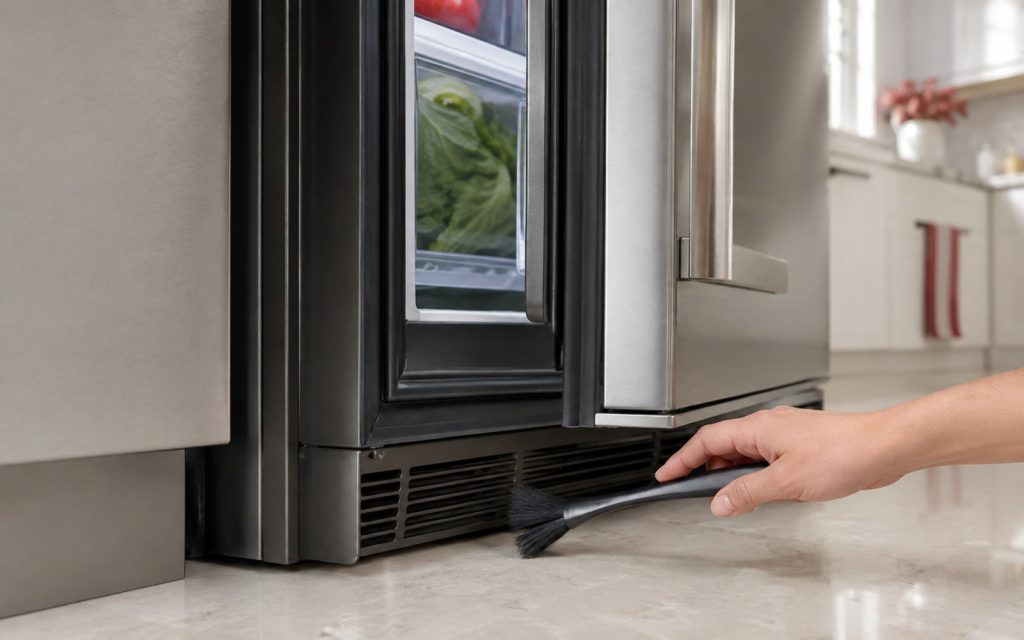
Keep vents and filters clear between visits. Restricted airflow often mimics electrical or sensor failures.
If water, burning smells, or sparking are present, stop using the appliance and arrange a professional inspection.
Sometimes, if the underlying cause was a one-time power event. Repeating codes need component-level testing.
No—not while a door or lock code is active. Self-clean adds heat to an already faulted lock path.
Yes. Codes map differently across JennAir generations; the model plate narrows the chart.
Yes. You choose your service provider; manufacturer authorization is not required for diagnosis.
A focused diagnostic visit on JennAir built-ins saves time and repeat trips. A little preparation turns an hour on-site into answers—not another…
Continue readingAfter a blackout, JennAir built-ins may show blank displays, lock icons, or fault codes. A calm reset sequence protects logic boards and…
Continue readingA silent JennAir warming drawer when guests are en route is stressful. Power, settings, and element paths each offer safe first checks.
Continue readingShare a few details and we’ll confirm an appointment. Prefer to talk? Call us and we’ll help right away.