
A leak from a panel-ready JennAir dishwasher demands quick floor protection. Learn whether the water is door, hose, or pump related before damage spreads.
Integrated dishwashers sit flush with cabinet runs—water that escapes the tub finds hardwood before anyone notices a drip sound.
Leak sources cluster at the door gasket, under-door plastic trough, inlet connections, and pump seals. Color and timing narrow the list faster than guesswork.
Door leaks often appear mid-cycle when spray hits a gasket that lost elasticity or a door that sits slightly proud of adjacent panels.
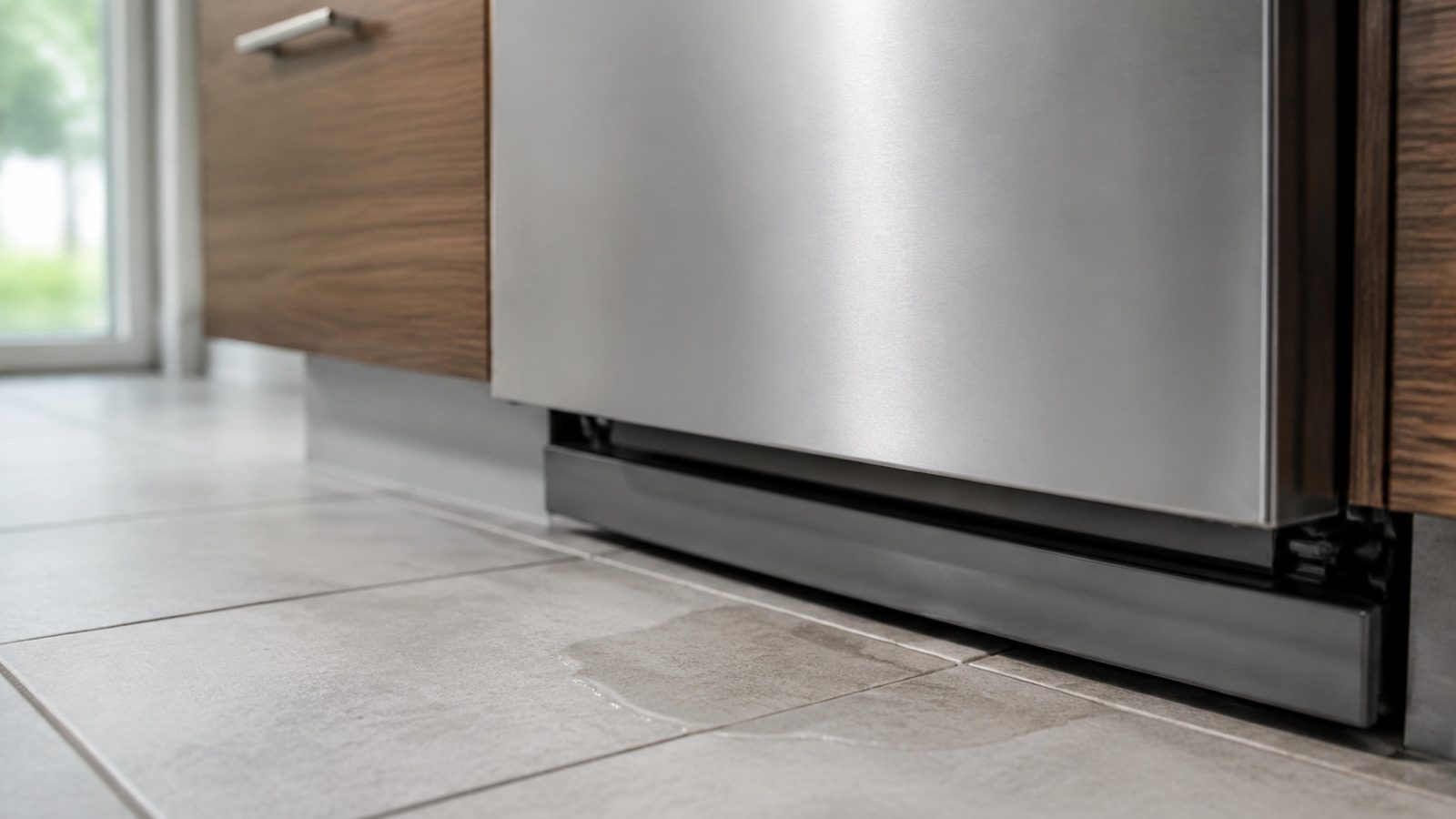
Toe-kick leaks may be clear wash water from an overfill or suds condition, or dark seepage from pump seal weep—different urgency, different repair.
Under-sink inlet hoses on hard-plumbed luxury kitchens can weep at ferrules when the dishwasher rocks on its mounts during heavy wash phases.
| Leak site | Water character | First response |
|---|---|---|
| Door front | Soapy spray mist | Stop cycle; inspect gasket and door alignment |
| Toe-kick left | Sudsy overflow | Use correct detergent amount; cancel cycle |
| Under sink | Drip when filling | Shut dishwasher water valve; check fittings |
Shut power at the breaker if water approaches outlets or the motor area. Towels and a shallow pan at the toe-kick buy time without moving the unit.
Do not operate a dishwasher that dumps water every fill—pump seal failures worsen with run time.
Safe to try
Leave to a technician
Sudsy leaks follow the wrong soap or rinse agent—often after a well-meaning switch to hand-wash liquid. The foam exits anywhere it can, including the door vent.
Non-sudsy seep after drain phase suggests pump or hose integrity issues needing hands inside the machine.
When a custom panel is screwed too tightly to the door, latching pressure distorts the gasket—leaks appear even with a healthy seal on paper.
We run fill and wash tests with the toe-kick removed for sight lines, dye-check pump areas, and inspect float and overfill switches before condemning tubs.
Integrated installs get leveled and shimmed to stop inlet hose stress.
Leaks punish slow reactions. Stop the cycle, protect floors, and match the water story to door, suds, or plumbing before hidden cabinet damage compounds.
This article covers Jennair Dishwasher Leaks At with practical checks you can run before booking a technician.
Official manuals and support notes are available on JennAir owner support.
Remember: Jennair Dishwasher Leaks At is easier to resolve when you capture the model number and when Jennair Dishwasher Leaks At first appeared.
Write down the full model number before ordering parts. Board and sensor revisions can change which part number is correct.
A single power reset can clear a temporary fault, but repeated returns of the same code usually mean a physical cause remains.
Keep vents and filters clear between visits. Restricted airflow often mimics electrical or sensor failures.
If water, burning smells, or sparking are present, stop using the appliance and arrange a professional inspection.
No—small leaks reach subfloors quickly in built-in runs.
Some models yes; confirm part fitment with model number first.
Yes—twist stresses door alignment and hose runs.
Policies vary; document immediately.
A focused diagnostic visit on JennAir built-ins saves time and repeat trips. A little preparation turns an hour on-site into answers—not another…
Continue readingAfter a blackout, JennAir built-ins may show blank displays, lock icons, or fault codes. A calm reset sequence protects logic boards and…
Continue readingA silent JennAir warming drawer when guests are en route is stressful. Power, settings, and element paths each offer safe first checks.
Continue readingShare a few details and we’ll confirm an appointment. Prefer to talk? Call us and we’ll help right away.