
When a JennAir induction cooktop will not recognize pans or touch input, power paths, compatible cookware, and control lockouts deserve attention before board replacement.
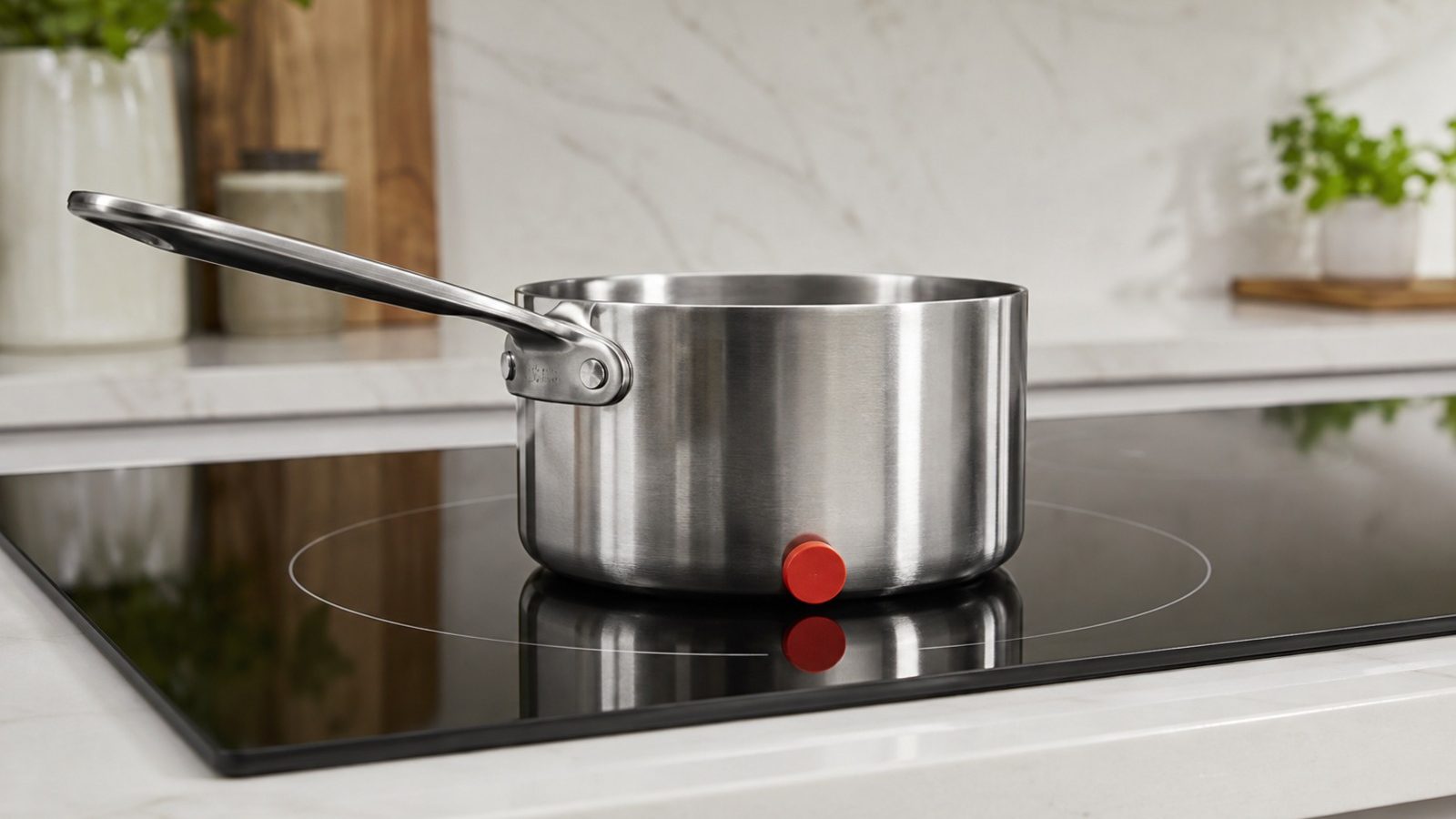
Induction cooking is contactless heat—magnetic fields coupling to the pan. When the surface stays cool and silent, the cooktop is often protecting itself from the wrong pan or a control state you did not intend.
JennAir induction modules in rangetops and cooktops share a premium control language. Read the display carefully; lock icons and error flashes are deliberate.
Only ferrous cookware triggers power transfer. All-clad and cast iron work; pure aluminum and copper without induction bases do not—no matter how expensive the pan.
Control lock, demo mode, and residual heat indicators can disable zones while looking powered. Child lock is a frequent accidental activation during cleaning.
Voltage and wiring issues on dedicated circuits show as flickering displays or zones that drop out under load—different from bad pans.
| Behavior | Likely cause | Owner check |
|---|---|---|
| No zones heat | Lock or power issue | Clear locks; test breaker |
| One zone dead | Zone sensor or coil | Swap pan to another zone |
| Flickering power level | Voltage or loose connection | Note other appliances on circuit |
Test with a known induction-compatible pan on the problem zone. A magnet sticking to the pan bottom is a crude but useful field test.
Do not open the cooktop to access coils or inverters—line voltage and high-frequency components stay sealed for licensed service.
Safe to try
Leave to a technician
If touch works but heat does not, cookware or coil paths lead the list. If touch and heat both fail, power or main control rises—especially after outages.
Single-zone failures after a boil-over often trace to moisture under the glass edge—dry thoroughly before assuming hardware death.
If a strong refrigerator magnet will not cling to the pan bottom, induction cannot couple—no error message required.
We measure supply voltage under load, test inverter IGBT modules and coil continuity with proper isolation, and verify touch panel communication buses.
Built-in rangetop integrations get checked for proper grounding and clearance from downdraft controls sharing the same circuit logic.
Induction silence is usually the cooktop saying no to the pan—or yes to a lock you forgot. Confirm compatibility and power, then let a technician read what happens under the glass.
This article covers Jennair Induction Surface That with practical checks you can run before booking a technician.
Official manuals and support notes are available on JennAir owner support.
Remember: Jennair Induction Surface That is easier to resolve when you capture the model number and when Jennair Induction Surface That first appeared.
Write down the full model number before ordering parts. Board and sensor revisions can change which part number is correct.
A single power reset can clear a temporary fault, but repeated returns of the same code usually mean a physical cause remains.
Keep vents and filters clear between visits. Restricted airflow often mimics electrical or sensor failures.
If water, burning smells, or sparking are present, stop using the appliance and arrange a professional inspection.
Only if magnetic—many high-end pans are not induction-ready.
Yes—surge-related touch loss needs voltage testing.
No—stop use and schedule service immediately.
Typically yes until cleared per manual.
A focused diagnostic visit on JennAir built-ins saves time and repeat trips. A little preparation turns an hour on-site into answers—not another…
Continue readingAfter a blackout, JennAir built-ins may show blank displays, lock icons, or fault codes. A calm reset sequence protects logic boards and…
Continue readingA silent JennAir warming drawer when guests are en route is stressful. Power, settings, and element paths each offer safe first checks.
Continue readingShare a few details and we’ll confirm an appointment. Prefer to talk? Call us and we’ll help right away.