
JennAir downdraft systems disappear into the counter until they do not rise—or rise but fail to pull. Motor, switch, and duct paths each tell part of the story.
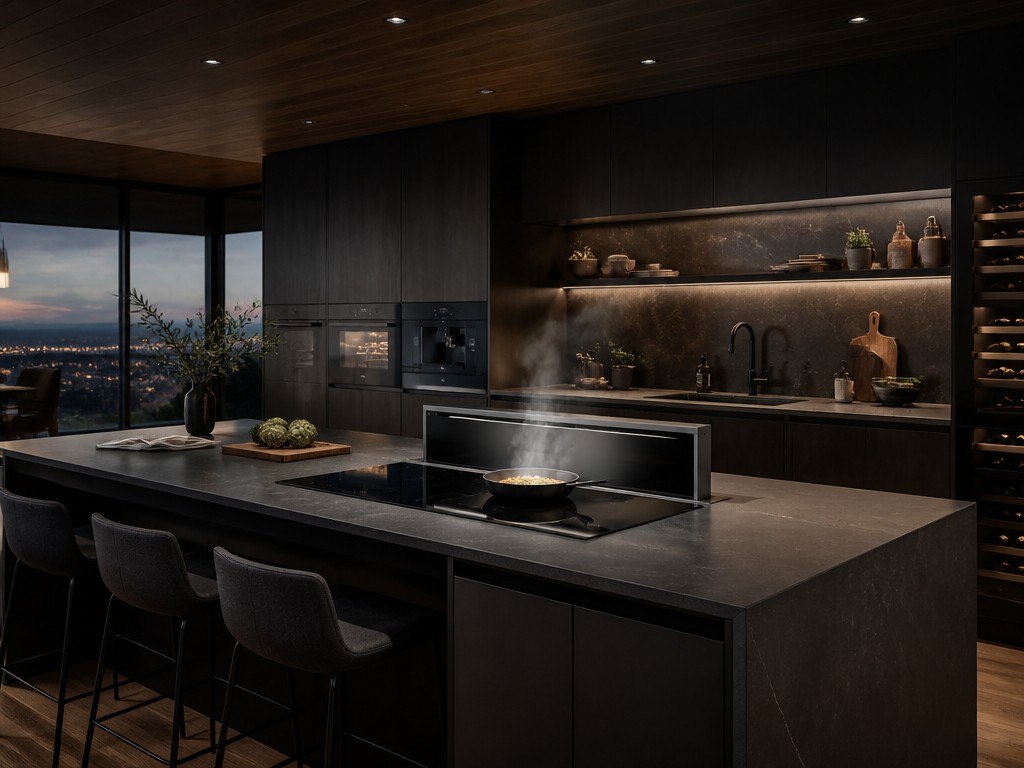
Downdraft is the magic trick of luxury rangetops: smoke pulled downward instead of toward a hood. When the column sticks or wheezes, cooking becomes a test of patience and open windows.
Performance depends on a motor that lifts the vent, a fan that moves air, and a duct run that actually reaches outdoors—not a decorative wall cap.
Lift motors raise and lower the chimney on command; binding tracks or failed limit switches leave the unit flush when you need height.
Fan speed buttons may work while airflow is weak—duct kinks behind cabinetry choke CFM even when the motor spins at full song.
Shared controls with cooktop power mean a tripped breaker can disable downdraft while burners still work on separate supplies on some installs.
| Symptom | Subsystem | Homeowner check |
|---|---|---|
| Will not rise | Lift motor or switch | Listen for hum; clear debris at slot |
| Rises, weak pull | Duct or filter | Clean grease filter; note recent remodel |
| No power at all | Circuit or control | Verify breaker; test with cooktop power |
Clean accessible grease filters per manual—downdraft filters saturate faster than hood filters on high-BTU cooking.
Do not climb into ductwork or dismantle lift mechanisms. Counter openings are pinch and electrical hazards.
Safe to try
Leave to a technician
Weak pull immediately after cabinet work often means a crushed flex duct behind the wall—installation issue, not motor death.
Gradual fade over years fits filter neglect and grease loading in the duct path before motor wear.
Hold a single sheet of tissue near the intake at high speed—it should draw firmly. Weak flutter means duct or filter, not user imagination.
Technicians test lift motor current, limit switches, fan CFM, and inspect duct length and elbow count against JennAir specifications for the run.
We coordinate with hood and cooktop wiring diagrams when controls are linked on the same junction.
Downdraft should feel effortless. Clean what you can reach, confirm the column moves, and schedule service when smoke stays in the room despite a rising vent.
This article covers Jennair Downdraft That Will with practical checks you can run before booking a technician.
Official manuals and support notes are available on JennAir owner support.
Remember: Jennair Downdraft That Will is easier to resolve when you capture the model number and when Jennair Downdraft That Will first appeared.
Write down the full model number before ordering parts. Board and sensor revisions can change which part number is correct.
A single power reset can clear a temporary fault, but repeated returns of the same code usually mean a physical cause remains.
Keep vents and filters clear between visits. Restricted airflow often mimics electrical or sensor failures.
If water, burning smells, or sparking are present, stop using the appliance and arrange a professional inspection.
Briefly yes; long-term not ideal—grease accumulates in kitchen air.
Normal on some models; no rise at all is the fault line.
Most JennAir downdrafts require exterior venting—confirm install type.
Often yes—noise may predict bearing wear soon.
A focused diagnostic visit on JennAir built-ins saves time and repeat trips. A little preparation turns an hour on-site into answers—not another…
Continue readingAfter a blackout, JennAir built-ins may show blank displays, lock icons, or fault codes. A calm reset sequence protects logic boards and…
Continue readingA silent JennAir warming drawer when guests are en route is stressful. Power, settings, and element paths each offer safe first checks.
Continue readingShare a few details and we’ll confirm an appointment. Prefer to talk? Call us and we’ll help right away.