JennAir Dishwasher Not Cleaning Dishes Properly is easier to diagnose when the symptom is described in operating terms rather than reduced to one suspected part. The exact JennAir model, installation, and the sequence…
A JennAir dishwasher that leaves dishes dirty is most often being limited by something outside the tub: the water supply valve, loading, detergent, or water temperature. The product help lists each of these before any internal part. If those check out and soil or film remains, book a visit.
JennAir Dishwasher Not Cleaning Dishes Properly is easier to diagnose when the symptom is described in operating terms rather than reduced to one suspected part. The exact JennAir model, installation, and the sequence of events matter because premium built-in appliances often combine several systems in a compact installation.
Do not change several conditions at once. If power is reset, settings are changed, filters are cleaned, and the appliance is moved in the same attempt, the evidence becomes harder to interpret.
| Symptom | What it can point to | What you can safely check |
|---|---|---|
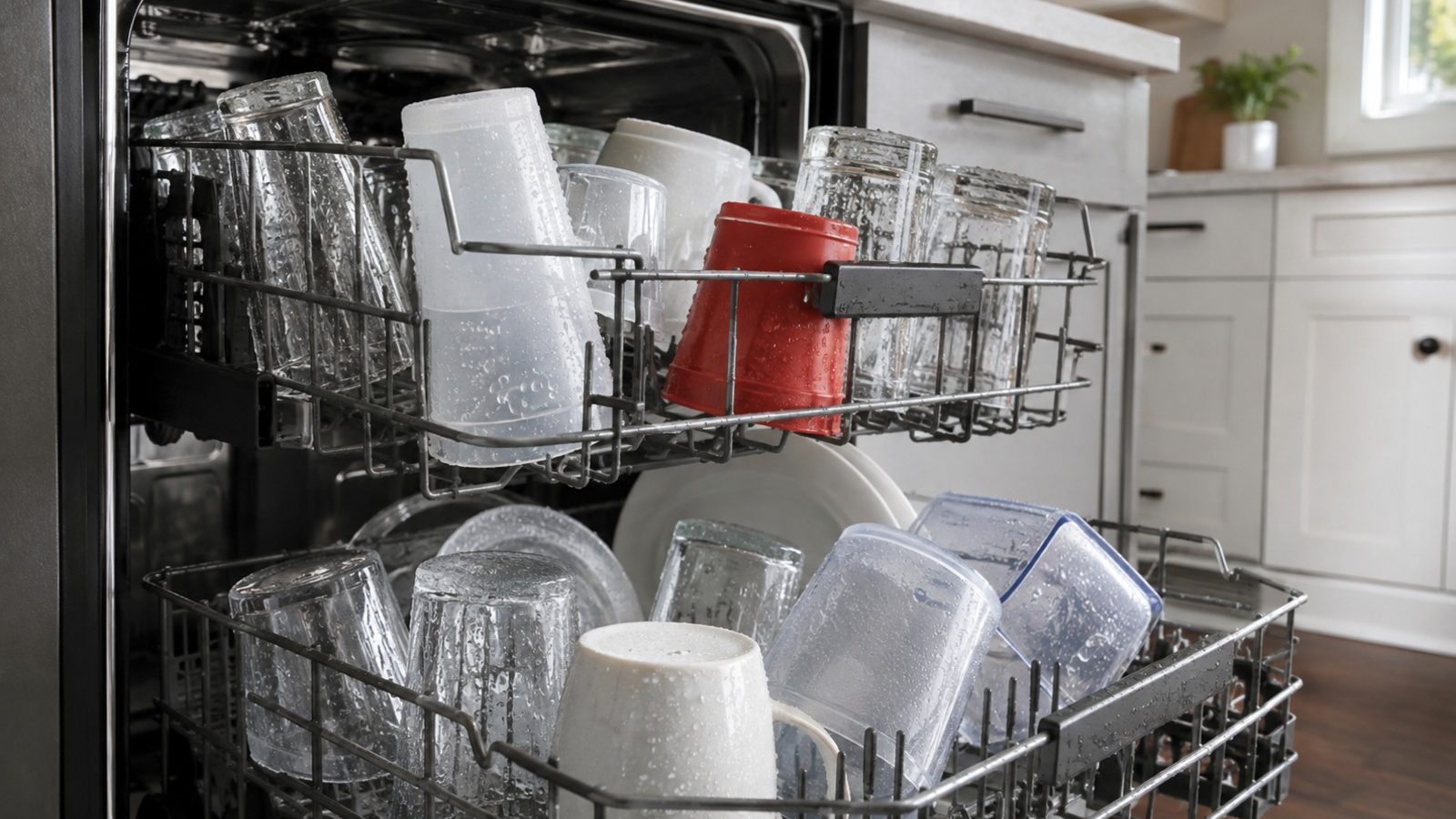
| Gritty film or leftover food on every load | Overloaded racks, wrong detergent, or a supply valve not fully open | Reload with space between items, use dishwasher detergent only, and confirm the supply valve is fully open |
| White spots or cloudy film on glasses | Hard water; the help page lists a cleaning product or white vinegar rinse for the film | Run the cleaning step your manual describes |
| Dishes feel cool and are still dirty | Incoming water below the recommended temperature, or a heating issue | Check that the hot-water connection is present and the water heater is not set low |
| Excess suds in the tub | Dish soap used instead of dishwasher detergent | Switch detergent and rerun |
| Long cycles with codes and cool dishes | A failed heating element or temperature sensor | Stop and book; the signs in the help page are not an owner repair |
JennAir dishwashers can use F/E-style diagnostics, flashing patterns, and platform-specific controls. Describe the exact cycle stage—fill, wash, drain, heat/dry, or start/control—because that sequence often narrows the fault family before any panel is removed. Keep built-in units installed until planned service access is needed.
The product help says a dishwasher works best when incoming hot water is about 120 degrees Fahrenheit. A water heater set below that, or a missing hot-water connection, leaves soil behind even when the machine itself is healthy. Water pressure is also on the list: the stated range is 20 to 120 psi.
A supply valve that is not fully open, or a flood-prevention device installed the wrong way, can starve the tub of water. These are installation conditions, which is why an older complaint can appear after a plumbing job nearby.
A visible symptom is the beginning of diagnosis, not the conclusion. Similar outward behavior can come from different components, installation conditions, or utility problems. Prove the pattern, rule out owner-accessible conditions, document the result, and stop before internal testing.
The goal is to collect evidence without changing several variables at once. One controlled observation is more valuable than repeated resets, random parts, or disassembly that changes the original symptom.
Only dishwasher detergent belongs in the dispenser. Dish soap creates suds, and suds cut down on the spray that actually cleans. The help page also warns that water at 15 grains per gallon or harder can damage the dishwasher, and it recommends a softener in that situation.
White spots and film on glassware are a hard-water sign in this guidance, and the page says a cleaning cycle with affresh or a white vinegar rinse removes them. If the film comes back quickly, the water supply, not the dishwasher, is the likelier cause.
A good diagnostic visit should reproduce the symptom or use your observations to select a narrow test path. Depending on the appliance, that may mean comparing temperature or sensor readings, checking a fan or pump command, confirming water flow, evaluating ignition behavior, reading stored diagnostics, checking control output, or proving that the external installation and utility conditions are normal.
The goal is not to replace the most commonly mentioned part. The goal is to identify the failed system, confirm that the proposed repair matches the exact model, and explain what work is inside the appliance repair scope.
Leave built-in, panel-ready, or tightly fitted JennAir appliances installed unless the service team specifically asks for access. Unplanned extraction can disturb cabinetry, panels, flooring, gas, water, drain, ventilation, or electrical connections and create a second problem.
If the appliance is integrated, provide access information when booking: custom panels, service elevators, gated entry, parking/loading limits, unusual cabinet clearances, or adjacent appliances that restrict service access.
Write down the complete JennAir model number, the exact symptom in one sentence, when it began, whether it is constant or intermittent, what related function still works normally, and any displayed code, message, light pattern, or alarm before power is reset. Also note recent power, water, gas, drain, ventilation, cleaning, filter, or installation events.
These details often reduce duplicate owner-level checks and help the technician arrive with a better model-specific starting point.
Do not clear codes before documenting them. Do not order a part because another JennAir owner reported a similar symptom. Do not apply one code meaning across unrelated appliance families. The site technical library must keep appliance/model context, especially for F/E-style codes that can appear on different platforms.
Avoid internal electrical testing, gas-pressure work, sealed-refrigeration work, safety-device bypassing, or microwave cabinet removal. Those steps require proper service information, tools, and training.
The product help ties white spots and film to hard water and recommends a cleaning step with affresh or white vinegar. If it returns soon, a water softener is the suggested route.
Yes. The help says incoming hot water works best at about 120 degrees Fahrenheit, so a lower setting can leave soil on dishes.
Too much detergent, or dish soap, can cause suds that reduce wash action. Use only dishwasher detergent in the amount the label gives.
For adjacent symptoms, read JennAir Dishwasher Not Draining: Safe Checks Before Service and JennAir Dishwasher Leak Repair Cost: What Changes the Scope. The JennAir error-code directory and JennAir model directory should be used when the exact code/model context is known.
If the live production route differs from the route above, preserve the working existing slug and map the link to that URL rather than creating a duplicate page.
Panel-ready JennAir dishwasher holding water, leaving grit, or posting an F-code? We restore quiet, thorough cycles.
Use one normal manual-approved restart when appropriate. Record any code or message first. If the same symptom returns, repeated resets are not a repair.
Usually no. Similar symptoms can come from different components, installation conditions, or external utilities.
No. Keep homeowner checks external and model-appropriate.
Yes. JennAir has multiple product generations and appliance families. The same symptom or code can require a different diagnostic path on another platform.
Why Your JennAir Refrigerator Is Not Cooling is easier to diagnose when the symptom is described in operating terms rather than reduced…
Continue readingWarm sodas in a JennAir beverage center usually mean airflow, loading, or control issues—not a reason to overhaul a built-in bar column…
Continue readingWhen a JennAir wine column creeps warm or swings cold, stability—not brute force cooling—protects bottles and reveals the real fault.
Continue readingShare a few details and we’ll confirm an appointment. Prefer to talk? Call us and we’ll help right away.