
When a JennAir wine column creeps warm or swings cold, stability—not brute force cooling—protects bottles and reveals the real fault.
Wine columns live beside cooking zones yet promise cellar calm. A few degrees of drift can mute a vintage you saved for a milestone dinner.
Temperature stability matters more than absolute precision for daily storage—but sudden swings or sustained warmth deserve methodical checks, not thermostat guessing.
Dual-zone columns separate reds and whites with independent sensors. One zone drifting while the other holds suggests localized sensor or damper issues—not whole-unit failure.
Integrated installs need rear and toe-kick ventilation like food columns. Restricted airflow raises cabinet temps and forces compressors into long runs that overshoot setpoint.
Door openings during parties create temporary spikes; sustained drift over days points to hardware or seal problems.
| Pattern | Likely cause | Owner action |
|---|---|---|
| Gradual warm creep | Condenser loading or seal | Clean grille; check gasket |
| Oscillating temps | Control hunting or probe | Note amplitude; avoid constant door opens |
| One zone only | Zone sensor or divider | Compare setpoints; document variance |
Use a standalone thermometer in the middle rack—not the door—to compare with the display. Log readings morning and evening for two days.
Do not attempt sealed-system or refrigerant work. Relocate precious bottles temporarily if temps exceed safe storage for extended periods.
Safe to try
Leave to a technician
One-night warmth after a tasting party often self-corrects. Warmth that climbs across a quiet week implicates cooling hardware or restricted airflow.
Columns installed in direct sun or near oven stacks need longer recovery—design limitation versus defect requires honest assessment.
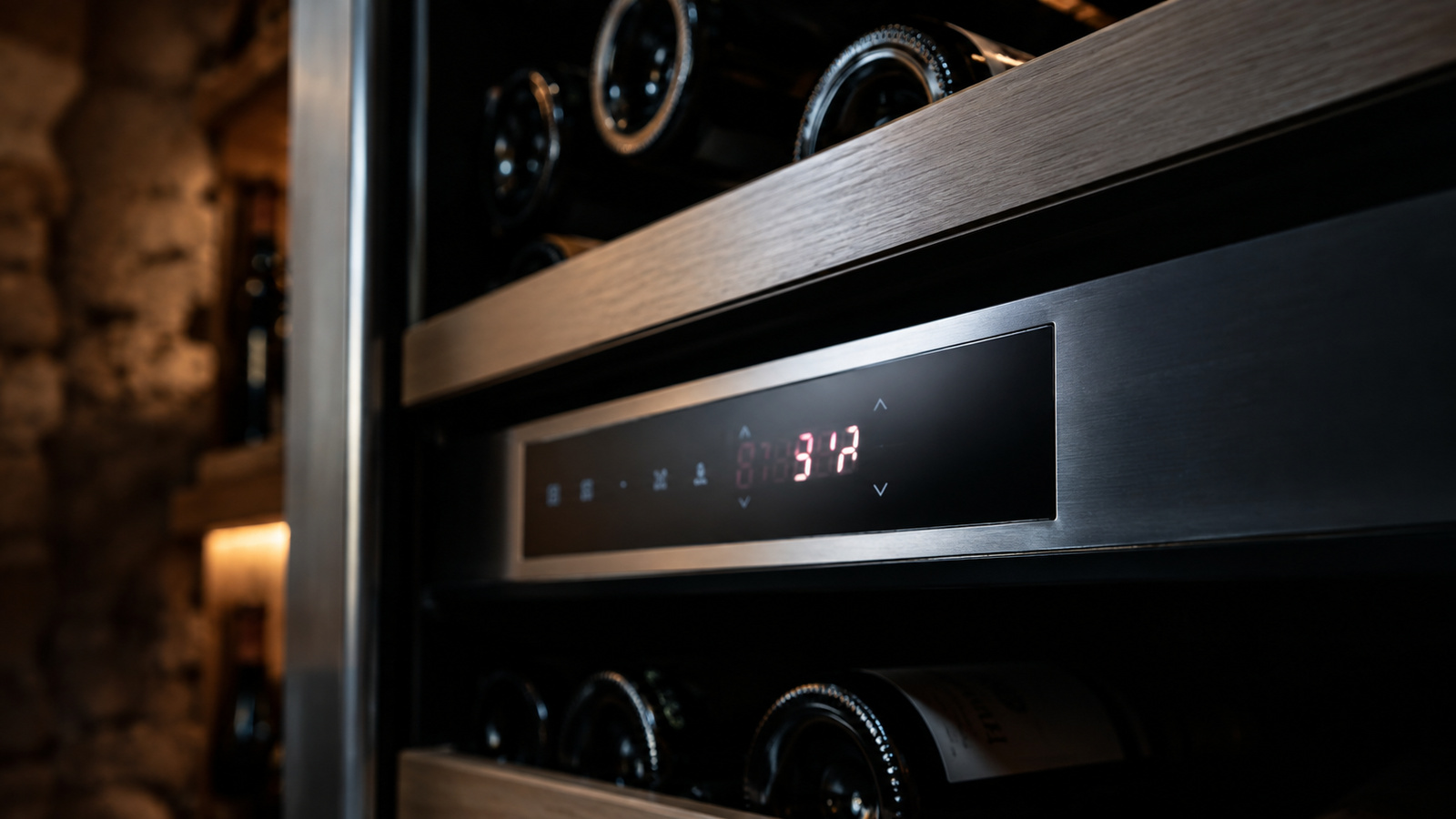
Door-mounted displays read warmer than stored wine during recovery. Measure where the bottles sit, not where the UI lives.
We test zone sensors, damper operation, and compressor cycling against spec—treating wine columns as precision refrigeration, not miniature fridges.
Install clearance verification prevents repeat drift after otherwise successful repairs.
Wine deserves quiet stability. Clean air paths, log temps at the rack, and invite service when drift outlasts the dinner party.
This article covers Jennair Wine Column Temperature with practical checks you can run before booking a technician.
Official manuals and support notes are available on JennAir owner support.
Remember: Jennair Wine Column Temperature is easier to resolve when you capture the model number and when Jennair Wine Column Temperature first appeared.
Write down the full model number before ordering parts. Board and sensor revisions can change which part number is correct.
A single power reset can clear a temporary fault, but repeated returns of the same code usually mean a physical cause remains.
Keep vents and filters clear between visits. Restricted airflow often mimics electrical or sensor failures.
If water, burning smells, or sparking are present, stop using the appliance and arrange a professional inspection.
Often 45–65°F depending on zone; follow manual for dual-zone presets.
Not recommended—humidity and temps differ from food refrigeration.
Brief outages usually fine; sustained warmth warrants relocation.
Excessive vibration disturbs wine and may indicate fan or compressor mount wear.
Warm sodas in a JennAir beverage center usually mean airflow, loading, or control issues—not a reason to overhaul a built-in bar column…
Continue readingWhen a JennAir ventilation hood sounds powerful yet smoke lingers, filters, duct runs, and fan health—not button labels—deserve scrutiny.
Continue readingA JennAir gas rangetop that clicks but will not light needs careful, limited checks. Gas supply and cleanliness are owner territory; valve…
Continue readingShare a few details and we’ll confirm an appointment. Prefer to talk? Call us and we’ll help right away.