Warm sodas in a JennAir beverage center usually mean airflow, loading, or control issues—not a reason to overhaul a built-in bar column overnight.
A JennAir beverage center that will not hold cold is usually dealing with airflow, load or placement before it is dealing with a sealed-system fault. Check that the base grille is clear, the unit is not overloaded with warm drinks, the door closes squarely and the unit is not in a mode that stops cooling. If cans stay warm on quiet nights, book service.
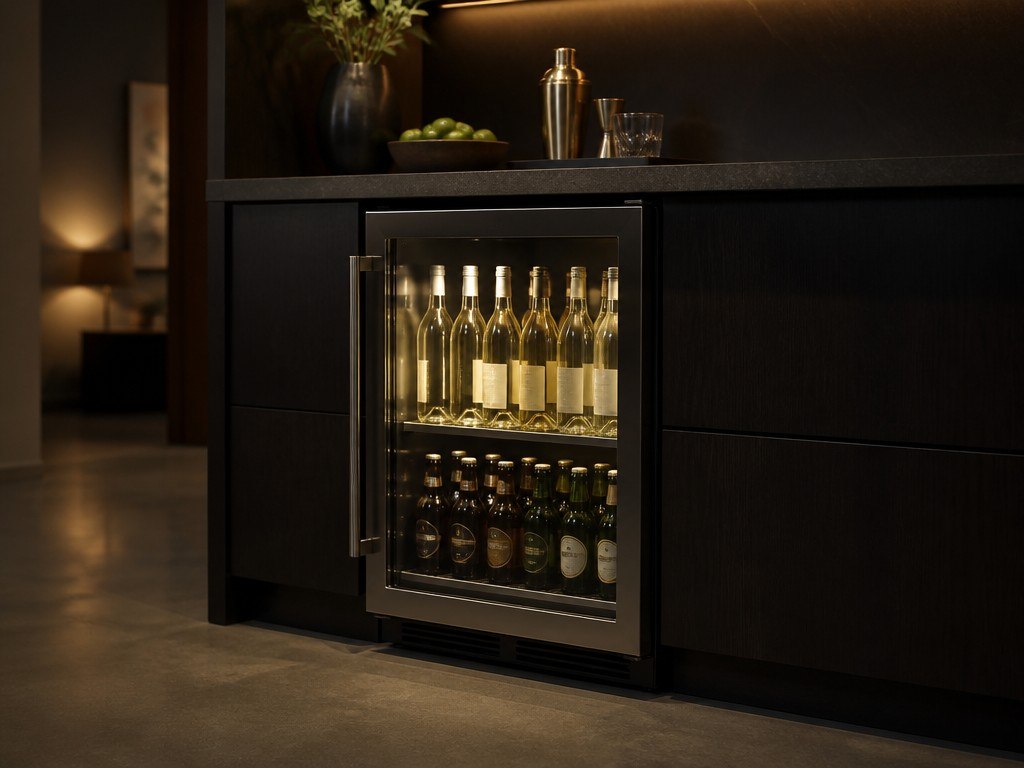
Beverage centers tuck under counters and beside wine columns, cycling more often than full refrigerators because glass doors leak visual temptation—and thermal energy.
When cans feel room-temperature despite a lit display, start with how the unit breathes and loads before assuming compressor failure.
Because it sits in a bar or under a counter, a beverage center has less room to shed heat than a freestanding unit, and small installation details show up as a warm shelf.
Glass-front models exchange heat faster than solid-door columns. Frequent door pulls during gatherings are normal; failure to recover between pulls is not.
Overstocking blocks fan paths behind bottles and cans. Air must circulate around product, not through a solid wall of seltzer.
Shared kitchen circuits and long run times during heat waves can leave beverage centers warm at the bottom while the top still feels cool—loading and fan issues mimic that pattern too.
The manufacturer’s help page for a beverage center that is too warm names a short list of causes. It says the unit should not be installed behind a cabinet door and the base grille should not be blocked. It adds that frequent door openings, large loads of warm drinks and colder settings all make the motor run longer, and that a big warm load can take hours to stabilize.
The same page says the motor normally runs about 40 percent to 80 percent of the time at normal room temperatures, so a unit that is running a lot is not automatically faulty. It also advises against installing the unit where the room drops below 55F (13C).
| Sign | Likely factor | Try first |
|---|---|---|
| Warm bottom shelf | Blocked fan or overload | Redistribute cans for air gaps |
| Never reaches setpoint | Grille restriction | Clean vent paths |
| Runs constantly | Door seal or high ambient | Check gasket; note room temp |
Clean accessible condenser areas and ensure toe-kick grilles are unobstructed by flooring or panel choices.
On the control side, factory presets suit normal household use. A setting changed several times in a row makes it hard to tell what helped, so adjust once and give the unit time before changing it again.
Use a thermometer among stored cans overnight. Compare to display after a quiet eight-hour period with minimal door openings.
Safe to try
Leave to a technician
The location of the warmth tells you a lot. A warm lower shelf with cooler top cans can mean air is not circulating through a crowded load, while uniformly warm contents after quiet days is a stronger sign of a cooling problem. A unit that is running constantly and still warm differs from one that seldom runs, and noting which you see is more useful than a single temperature reading.
Display readings and stored drinks are not the same thing. A display can show the air near the sensor, while cans take hours to settle after a restock, so judge the unit by the contents after a quiet period.
Warmth after stocking room-temperature drinks en masse is expected until the unit catches up—give time before calling.
Gradual inability to hold temp across quiet weeks suggests fan, seal, or refrigerant-side issues for technicians.
Chill beverages elsewhere before filling the center for an event—built-in units recover faster from cold stock than from warm cases.
Technicians measure evaporator airflow, test thermistors, and verify fan and compressor cycling without breaking into sealed systems unnecessarily.
We note bar install heat sources—dishwasher adjacency and poor ventilation are frequent culprits in luxury builds.
A beverage center should recover between rounds. Load it thoughtfully, keep air moving, and schedule service when quiet nights still leave cans warm.
A large load of warm drinks can take hours to stabilize, according to the manufacturer’s help. Judge performance after a quiet period rather than immediately after loading.
Often, yes. The manufacturer says the motor runs a large share of the time at normal room temperatures and more in warm conditions, so run time alone is not a fault.
The manufacturer’s guidance is against that, and also against blocking the base grille, since the unit needs to breathe. A closed cabinet traps heat around it.
Call when cans stay warm after quiet days with a clear grille, a sensible load and a closing door. Avoid sealed-system work yourself.
Official manuals and support notes are available on JennAir owner support.
Write down the full model number before ordering parts. Board and sensor revisions can change which part number is correct.
A single power reset can clear a temporary fault, but repeated returns of the same code usually mean a physical cause remains.
Keep vents and filters clear between visits. Restricted airflow often mimics electrical or sensor failures.
If water, burning smells, or sparking are present, stop using the appliance and arrange a professional inspection.
Often 34–39°F for carbonation balance—follow manual presets.
Usually too cold for long wine storage—use wine column instead.
Some yes in humid kitchens; constant pooling suggests seal issues.
Yes—poor ventilation amplifies summer struggles.
Why Your JennAir Refrigerator Is Not Cooling is easier to diagnose when the symptom is described in operating terms rather than reduced…
Continue readingWhen a JennAir wine column creeps warm or swings cold, stability—not brute force cooling—protects bottles and reveals the real fault.
Continue readingJennAir Microwave Runs but Does Not Heat is easier to diagnose when the symptom is described in operating terms rather than reduced…
Continue readingShare a few details and we’ll confirm an appointment. Prefer to talk? Call us and we’ll help right away.