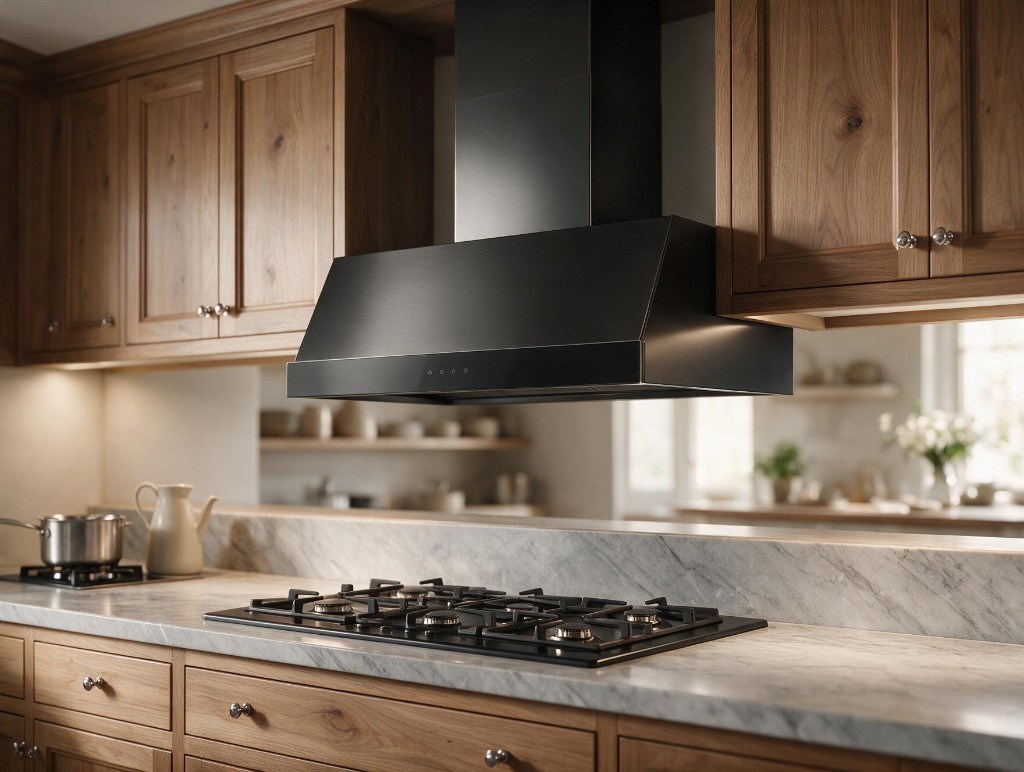
When a JennAir ventilation hood sounds powerful yet smoke lingers, filters, duct runs, and fan health—not button labels—deserve scrutiny.
A JennAir hood that roars but barely clears the cooktop is usually losing airflow somewhere other than the motor. Grease-loaded filters, a restricted duct, a closed exterior damper or too little make-up air in a tight house all produce loud, weak capture. Clean the filters first and run the hood before cooking starts.
Designer hoods sit like sculpture over JennAir rangetops. A roar without capture insults both the room and the appliance—noise is not airflow.
Weak ventilation in luxury kitchens often traces to installation compromises hidden above the ceiling, not underpowered motors on paper.
Sound and airflow are not the same measurement. A fan can be loud because it is working against resistance, and that resistance is the clue.
The pattern across speeds is the most useful thing to notice. A hood that clears the cooktop at a low setting but not a high one points to a different cause than a hood that is weak at every setting, and a rattle at every speed suggests something loose rather than restricted.
Charcoal or baffle filters loaded with grease cut CFM dramatically while motors scream. Regular filter service is the cheapest horsepower upgrade.
Long duct runs with multiple elbows bleed pressure. JennAir hoods rated for performance need compliant duct diameter and shortest reasonable path.
Make-up air requirements in tight modern homes can starve hoods without balanced ventilation—symptoms look like weak pull at high speed only.
The manufacturer’s help for poor cooking performance with a downdraft vent lists several reasons that apply to hoods as well. Very high fan speed can pull heat away from cookware, grease filters need frequent cleaning, ceiling fans and air-conditioning registers disturb capture, and an airtight house may need make-up air. Cabinets placed too close can create dead air pockets.
The same page advises running the ventilation before cooking begins. That detail matters more than it sounds, since a hood started after smoke has spread has to catch a plume that has already escaped.
| Sign | Likely issue | Try first |
|---|---|---|
| Loud, weak suction | Grease-clogged filters | Clean or replace filters |
| Good at low, weak at high | Duct restriction or makeup air | Note home tightness; inspect accessible duct |
| Rattle at all speeds | Loose baffle or debris in fan | Power off; inspect visible fan area |
Turn hood power off before removing filters or reaching near fan blades. Sharp baffle edges and spinning assemblies injure quickly.
Do not climb onto counters or ladders beyond comfortable reach—call service for high-mounted pro hoods.
Safe to try
Leave to a technician
Higher speed is not always better. At a very high speed, a fan can draw heat away from the pan and disturb the flame or cooking temperature, and a drafty room can pull smoke past the hood. Try a lower or medium setting, a nearby window or a closed ceiling fan before concluding the hood is weak.
Fan speed and filter condition also interact. A loaded filter can make a high setting sound strained without moving more air, which is why cleaning comes first.
Weak pull from day one screams duct design, not motor failure. Gradual decline over seasons fits grease loading in filters and duct walls.
Noise without movement may mean a fan spinning in a blocked plenum—CFM on paper, zero at the burner.
At high speed, tissue should stick firmly to the filter area. Barely lifting means real-world CFM is gone despite sound.
Treat the tissue test as a rough indicator, not a measurement. It tells you whether suction is present at the filter, but not whether the duct, the damper or the make-up air is the cause.
We measure static pressure, inspect fan amps, verify duct transitions, and discuss make-up air when high-speed performance collapses in tight homes.
Audit beats replacing an expensive hood that was never ducted for its rating.
A hood should whisper confidence, not empty thunder. Maintain filters, start it early, and bring in measurement when smoke outstays its welcome.
A loud fan with weak capture often means airflow is restricted by clogged filters, duct problems or a damper that is not opening. Clean the filters and check whether the exterior damper opens when the fan runs.
Not always. A very high speed can draw heat away from the pan, and a drafty room can pull smoke around the hood. Start the hood early at a moderate setting.
It can be. The manufacturer’s ventilation help says an airtight house may need make-up air, which is worth discussing if the hood is weak at higher speeds.
When clean filters and an open damper still leave weak pull, or when the fan makes a grinding, rattling or hesitating sound. High-mounted hoods are best left to service.
Official manuals and support notes are available on JennAir owner support.
Write down the full model number before ordering parts. Board and sensor revisions can change which part number is correct.
A single power reset can clear a temporary fault, but repeated returns of the same code usually mean a physical cause remains.
Keep vents and filters clear between visits. Restricted airflow often mimics electrical or sensor failures.
If water, burning smells, or sparking are present, stop using the appliance and arrange a professional inspection.
Monthly for heavy searing; quarterly for moderate use.
Usually not equivalent—ducted is preferred when possible.
Only if duct and makeup air support it—otherwise noise only.
Often nuisance but can indicate loose parts contacting moving fan.
Why Your JennAir Refrigerator Is Not Cooling is easier to diagnose when the symptom is described in operating terms rather than reduced…
Continue readingWarm sodas in a JennAir beverage center usually mean airflow, loading, or control issues—not a reason to overhaul a built-in bar column…
Continue readingWhen a JennAir wine column creeps warm or swings cold, stability—not brute force cooling—protects bottles and reveals the real fault.
Continue readingShare a few details and we’ll confirm an appointment. Prefer to talk? Call us and we’ll help right away.