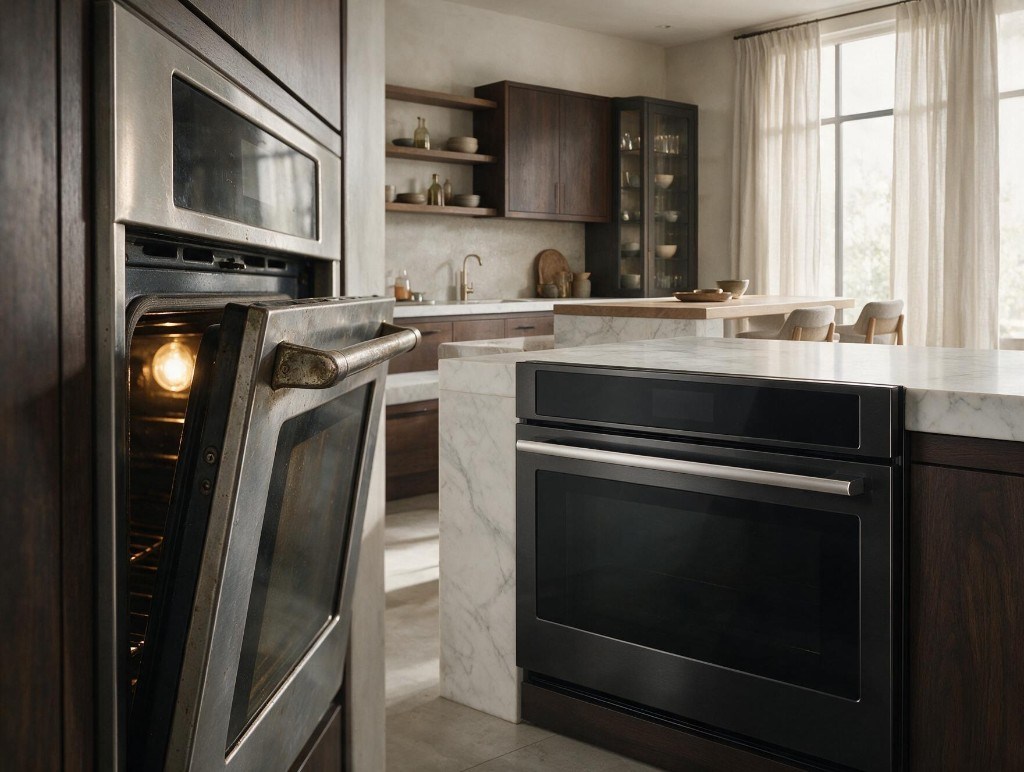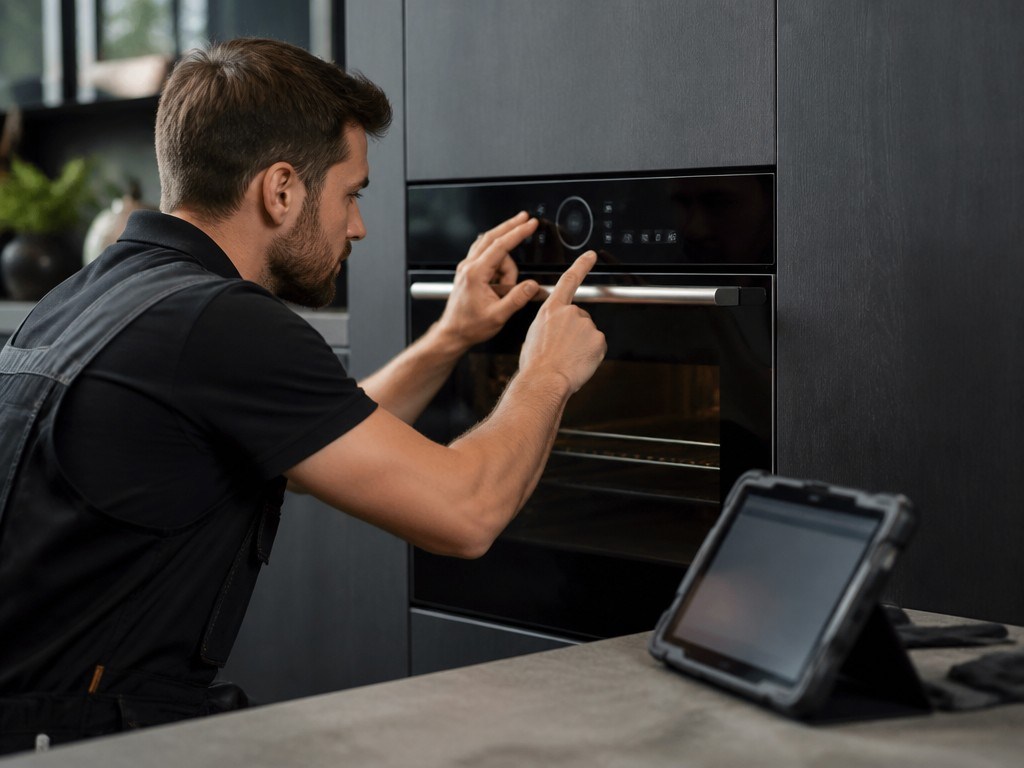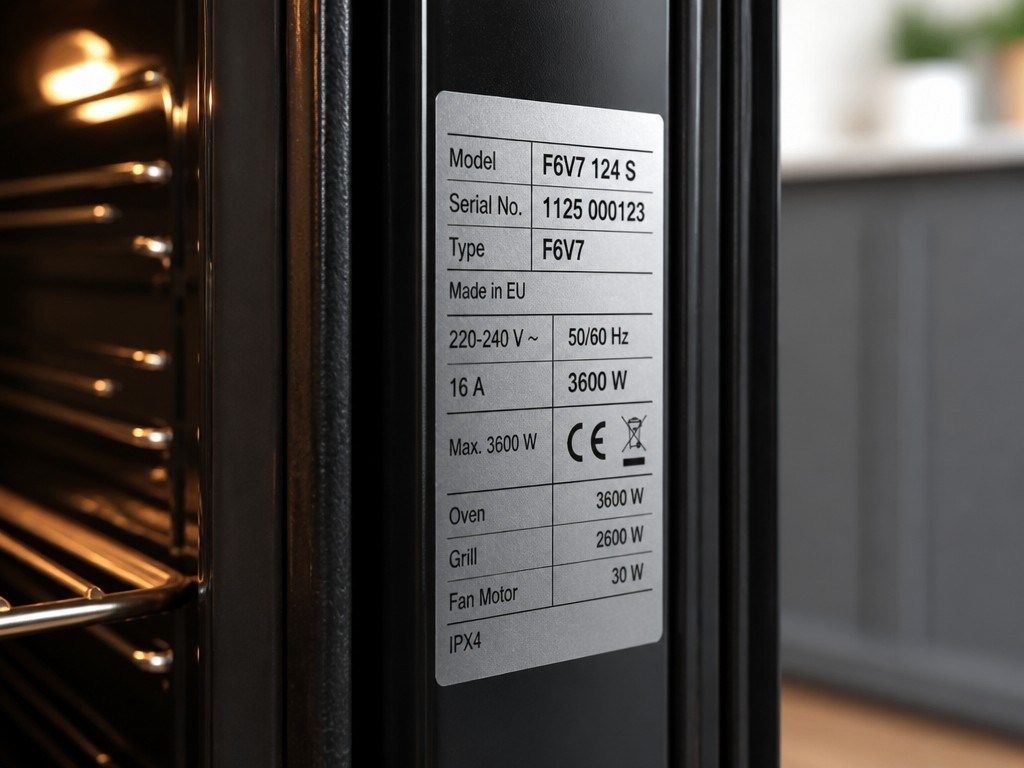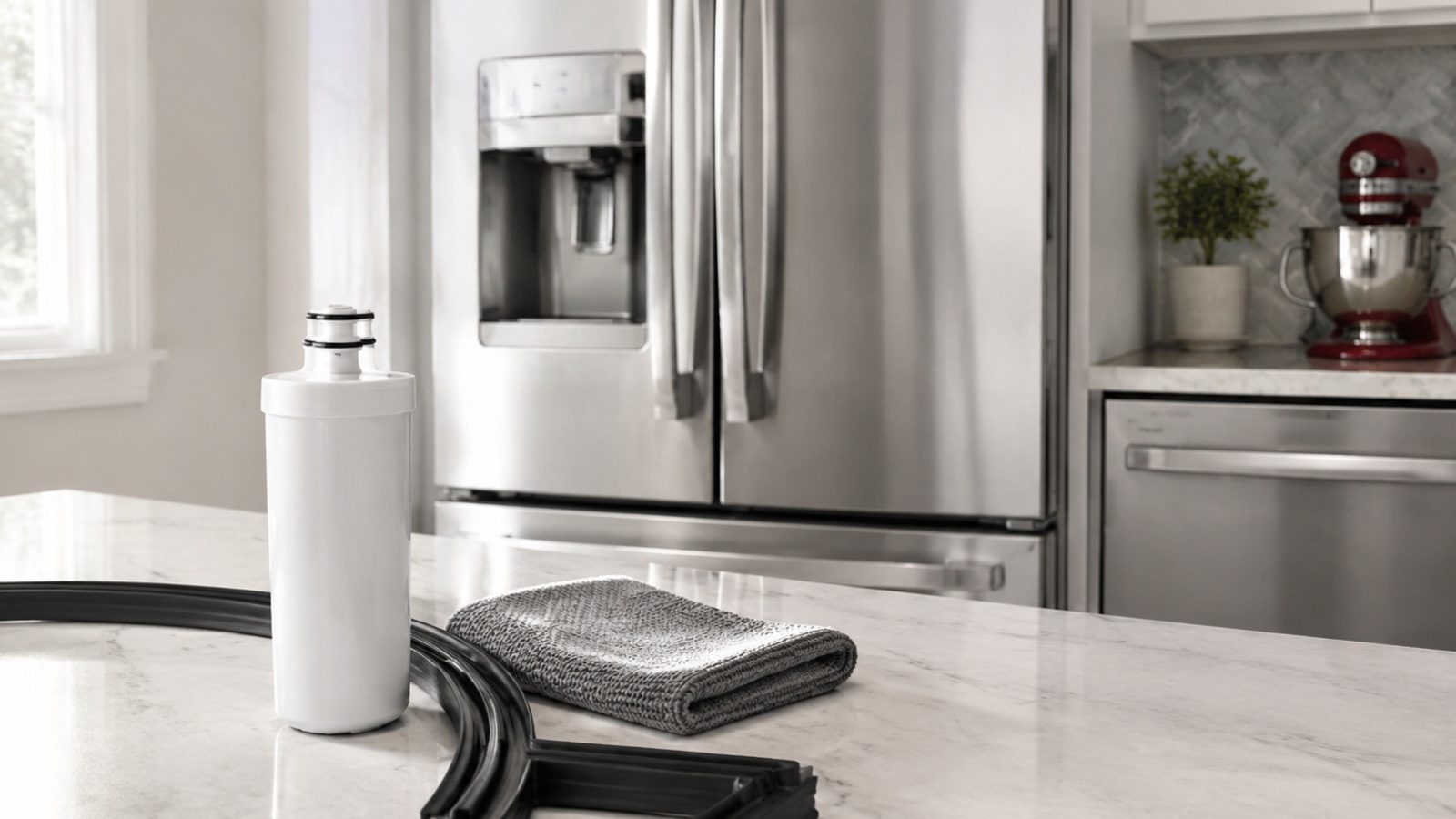

JennAir kitchens mix exposed stainless with panel-ready fronts. The wrong cleaner on either surface leaves permanent shadows in a room built to photograph beautifully.
Luxury built-ins ask you to clean two worlds: brushed stainless handles and trim alongside wood or painted panels that must never see metal polish.
Good care is directional—literally. Stainless grain matters; lacquered panels demand gentleness. Calm products beat aggressive shine chasing.
Pro-style stainless on handles, oven glass trims, and column edges shows fingerprints and cooking acids quickly—regular light wiping preserves the grain.
Panel-ready dishwasher and refrigerator fronts are not stainless—they are painted or laminated surfaces behind custom cabinet panels; treat them like fine furniture.
Black stainless and dark finishes scratch differently than classic brushed—avoid abrasive pads universally unless manual explicitly allows.
| Surface | Use | Avoid |
|---|---|---|
| Brushed stainless trim | Mild soap, microfiber, grain wipe | Steel wool, chlorine bleach |
| Panel-ready fronts | Damp cloth, non-abrasive cleaner | Stainless polish, magic erasers |
| Oven glass | Cool surface, approved degreaser | Abrasive powders, razor on coated glass |
Wipe stainless with the grain using soft cloths. Rinse residues that can pit if left salty after cooking splatter.
On panel-ready surfaces, spray cleaner on the cloth—not the panel edge—to prevent liquid migration behind trim.
Safe to try
Leave to a technician
Uniform haze from cleaners differs from directional scratches from abrasive pads—photograph under angled light before attempting aggressive correction.
Handles near rangetops accumulate polymerized oil that mild soap alone will not move—brief approved degreaser contact time helps.
Every new cleaner meets the underside of a handle or inner door edge first—luxury finishes forgive nothing in the center of the door.
Deep scratches on visible stainless may need professional grain blending or part replacement—DIY abrasion often worsens appearance.
We can advise on trim replacement when oven or column handles etch from years of chlorine-based kitchen sprays used nearby.
A JennAir kitchen shines with restraint: soft cloths, correct products per surface, and patience with grain. Protect panels like furniture, stainless like instrument metal.
This article covers Cleaning Jennair Stainless And with practical checks you can run before booking a technician.
Official manuals and support notes are available on JennAir owner support.
Remember: Cleaning Jennair Stainless And is easier to resolve when you capture the model number and when Cleaning Jennair Stainless And first appeared.
Write down the full model number before ordering parts. Board and sensor revisions can change which part number is correct.
A single power reset can clear a temporary fault, but repeated returns of the same code usually mean a physical cause remains.
Keep vents and filters clear between visits. Restricted airflow often mimics electrical or sensor failures.
If water, burning smells, or sparking are present, stop using the appliance and arrange a professional inspection.
Diluted occasionally yes; rinse well—acid prolonged contact can etch.
Often approved stainless cleaner; heavy tint may need pro help.
Only products listed compatible—some block future factory finish.
No—usually paint or laminate; use furniture-grade cleaners.
Built-in JennAir replacements involve cabinetry, panels, and plumbing—not just box swaps. Repair often wins when the suite and finishes still have years…
Continue readingLuxury JennAir kitchens reward a calm maintenance rhythm—filters, seals, and ventilation—more than emergency heroics when guests are due.
Continue readingModel and serial plates on JennAir built-ins hide behind panels and toe-kicks. Knowing where to look saves time on every service call…
Continue readingShare a few details and we’ll confirm an appointment. Prefer to talk? Call us and we’ll help right away.