
Heavy frost in a JennAir column freezer is a moisture ledger. Learn what safe habits reduce buildup and when defrost components need professional testing.
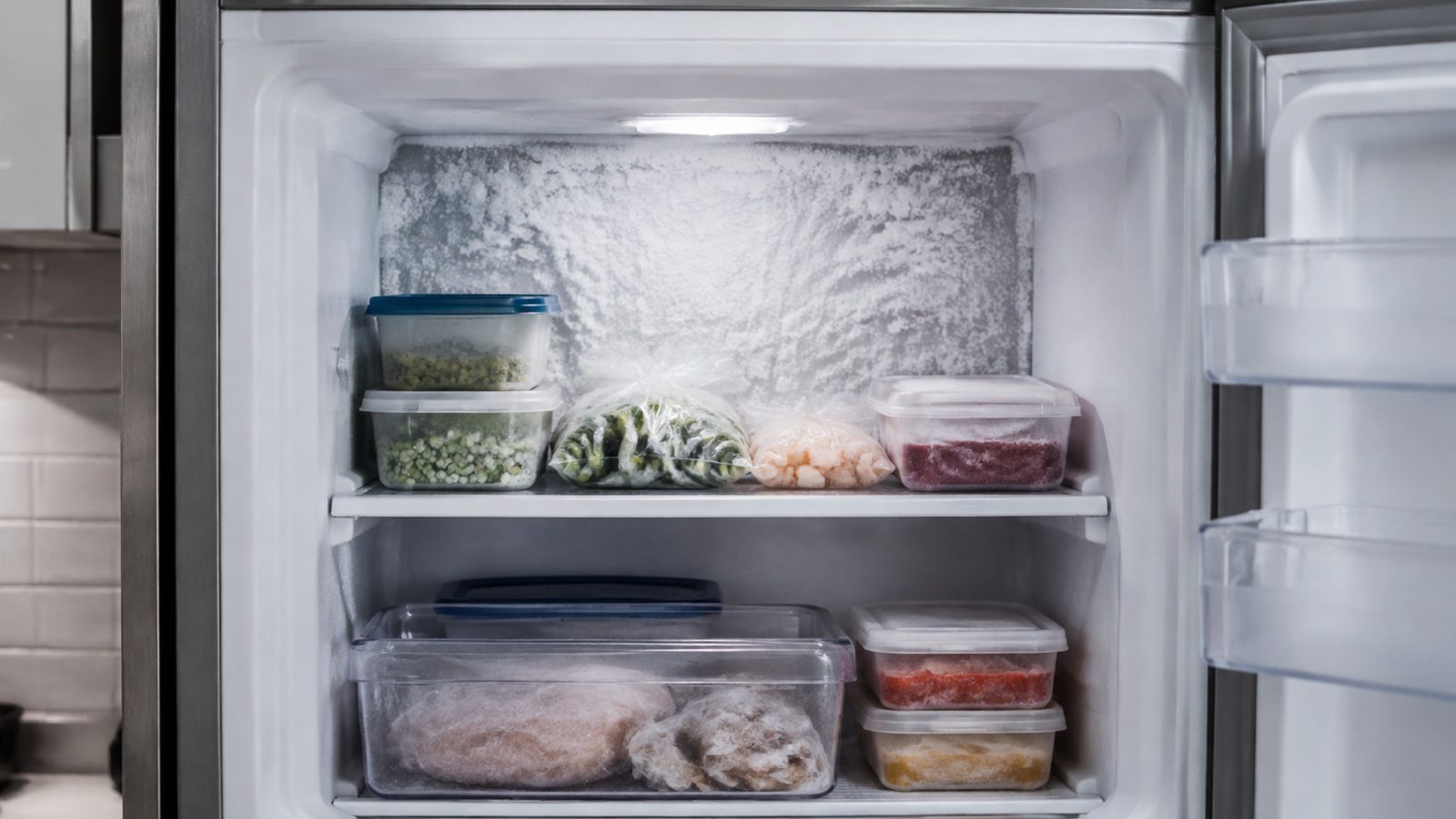
A thin rime of frost is normal; a snowfield on the back wall is the freezer asking for help. Built-in columns hide the problem longer because their doors hide daily use.
Frost is frozen humidity. Find the air leak or the defrost that never completes, and the sheets retreat without heroic scraping.
Every door opening pulls humid kitchen air across cold coils. Columns in open kitchen plans see more traffic than a garage freezer ever will.
Defrost cycles pause compressor run and warm the evaporator briefly. When a sensor misreads ice as food, defrost ends early—frost accumulates in layers.
Drawer-style freezer bins can misseat on their rails, leaving a hairline gap at the top seal that admits moist air all night.
| Frost location | Usual story | Homeowner lever |
|---|---|---|
| Back wall only | Defrost schedule or sensor | Note if fan runs; avoid manual chipping |
| Door frame and shelves | Gasket or alignment | Clean gasket; check bin seating |
| After power loss | Partial thaw and refreeze | Allow one full defrost cycle |
Never use metal tools inside the freezer liner— punctures are irreversible. Let the appliance defrost on its schedule or with power off and doors open if the manual allows.
Keep freezer vents visible. A stacked column of boxes is an invitation for warm spots that pull more moisture from the air.
Safe to try
Leave to a technician
Summer humidity spikes frost overnight after kids raid the freezer for ice cream. Winter air is drier; if frost still climbs, suspect hardware not weather.
After vacations, a column running empty and cold builds frost faster—fewer thermal masses mean faster coil temperature swings.
If heavy frost returns within seven days of a thorough defrost and seal check, the defrost heater or sensor deserves instrumented testing—not another manual scrape.
Technicians run forced defrost modes where available, measure heater amperage, and compare thermistor resistance to spec across temperature steps.
We also verify control firmware behavior—some boards need updates when frost complaints cluster on a model year.
Treat frost as a moisture audit. Tighten the easy leaks in daily use, then hand off repeating sheets to someone who can read defrost circuits safely.
This article covers Frost Sheets In A with practical checks you can run before booking a technician.
Official manuals and support notes are available on JennAir owner support.
Remember: Frost Sheets In A is easier to resolve when you capture the model number and when Frost Sheets In A first appeared.
Write down the full model number before ordering parts. Board and sensor revisions can change which part number is correct.
A single power reset can clear a temporary fault, but repeated returns of the same code usually mean a physical cause remains.
Keep vents and filters clear between visits. Restricted airflow often mimics electrical or sensor failures.
If water, burning smells, or sparking are present, stop using the appliance and arrange a professional inspection.
A thin line maybe; thick blankets are not.
Risky near plastic liners—power off and natural defrost is safer.
Auto-defrost manages it; failure looks like manual-defrost buildup.
Only if seals were the root cause—test after install.
Warm sodas in a JennAir beverage center usually mean airflow, loading, or control issues—not a reason to overhaul a built-in bar column…
Continue readingWhen a JennAir wine column creeps warm or swings cold, stability—not brute force cooling—protects bottles and reveals the real fault.
Continue readingWhen a JennAir ventilation hood sounds powerful yet smoke lingers, filters, duct runs, and fan health—not button labels—deserve scrutiny.
Continue readingShare a few details and we’ll confirm an appointment. Prefer to talk? Call us and we’ll help right away.