
Columns whisper until they do not. Decode humming, clicking, and fan whistles so you know which sounds are routine and which warrant a service call.
Built-in refrigeration should feel invisible—until a new tick or moan arrives behind the cabinetry. Sound travels through cabinet panels, so the noise you hear may not be where you think.
Start by naming the sound, its rhythm, and whether cooling still looks normal. That triad separates normal expansion pops from failing start components.
Compressors in modern columns often run with a low hum variable with load. Short clicks at start and stop are frequently relay or valve noise, not emergencies.
Evaporator and condenser fans hitting ice or a loose shroud produce rhythmic ticking or whirring that changes when you open a door—fans pause on many models.
Water inlet valves buzz briefly during icemaker fill. A buzz that never stops suggests a stuck valve or pressure issue, not fan trouble.
| Sound | Cadence | Likely source |
|---|---|---|
| Steady hum | Continuous while cooling | Compressor or variable-speed drive |
| Click every 3–5 min, no hum | Repeating | Start device attempting and failing |
| Whistle or whine | Changes with door open | Evaporator fan or ice obstruction |
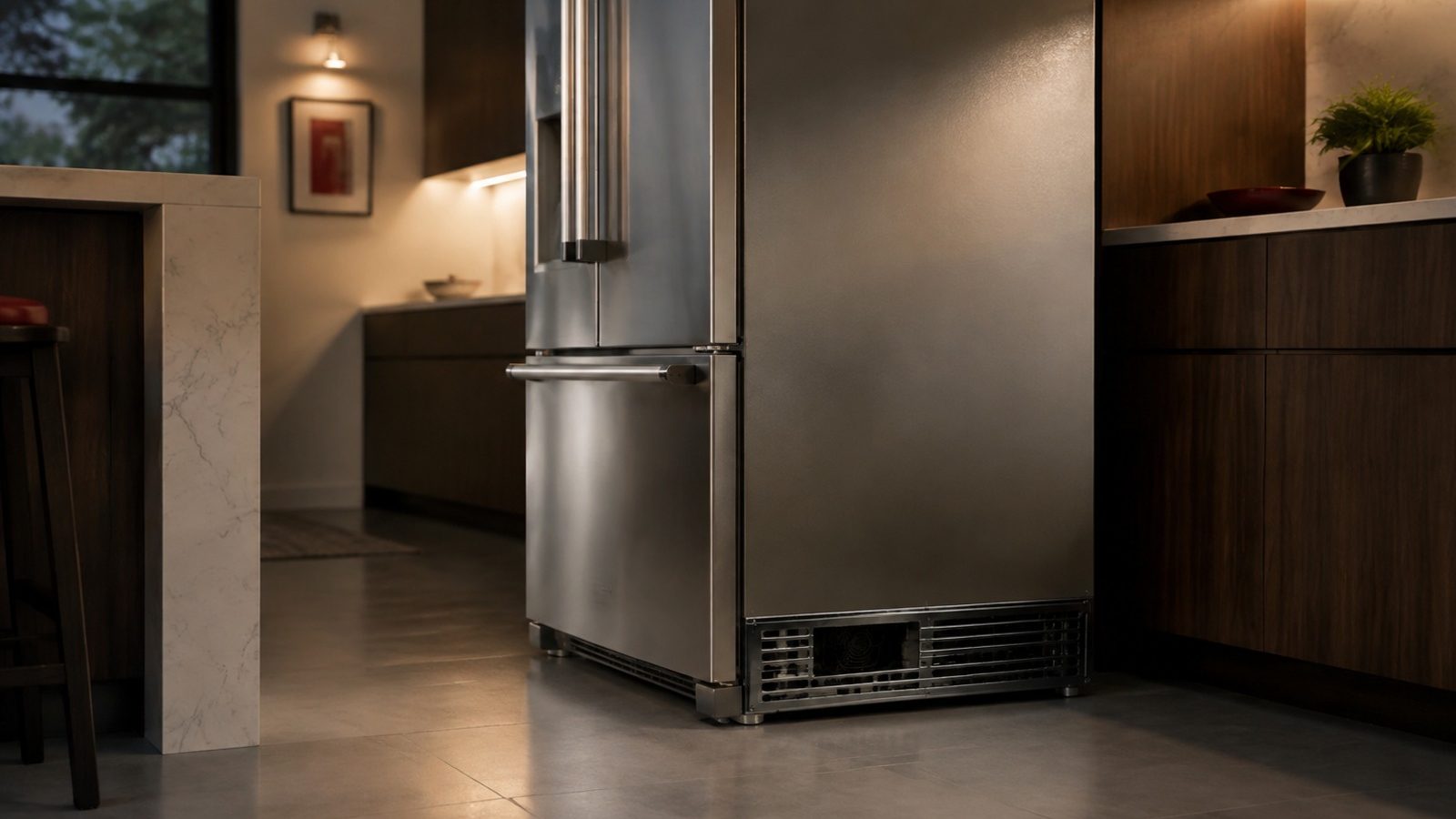
Open the toe-kick grille and listen—condenser fans are often accessible without moving the unit. Compare sound with doors open versus closed.
Do not remove rear access panels screwed into live refrigeration lines. Observation beats invasive curiosity.
Safe to try
Leave to a technician
Clicking with warming temps is a different urgency than humming with stable temps. Pair your ears with a thermometer in both sections.
New noise after cabinet work may be a fastener left loose on a fan shroud—correlate with any recent install activity.
Columns defrost on timers that may run when the kitchen is quiet. A brief gurgle or pop during those hours can be refrigerant flow—not a morning emergency.
Technicians isolate fans, valves, and compressors with mechanical stethoscopes and amperage clamps—sound alone never justifies sealed-system surgery.
We inspect install clearance too; a fan blade kissing a panel makes luxury kitchens sound cheap.
Listen like a diagnostician: rhythm, location, and temperature together. When the story conflicts or cooling slips, independent service can pinpoint the mechanical voice.
This article covers Unusual Sounds From A with practical checks you can run before booking a technician.
Official manuals and support notes are available on JennAir owner support.
Remember: Unusual Sounds From A is easier to resolve when you capture the model number and when Unusual Sounds From A first appeared.
Write down the full model number before ordering parts. Board and sensor revisions can change which part number is correct.
A single power reset can clear a temporary fault, but repeated returns of the same code usually mean a physical cause remains.
Keep vents and filters clear between visits. Restricted airflow often mimics electrical or sensor failures.
If water, burning smells, or sparking are present, stop using the appliance and arrange a professional inspection.
Low hum while running often is; grinding or screeching is not.
Yes—ice contact produces ticking until defrost clears it or service is needed.
No—modern sealed motors are not user-serviceable.
Warranty terms vary; document onset either way.
Warm sodas in a JennAir beverage center usually mean airflow, loading, or control issues—not a reason to overhaul a built-in bar column…
Continue readingWhen a JennAir wine column creeps warm or swings cold, stability—not brute force cooling—protects bottles and reveals the real fault.
Continue readingWhen a JennAir ventilation hood sounds powerful yet smoke lingers, filters, duct runs, and fan health—not button labels—deserve scrutiny.
Continue readingShare a few details and we’ll confirm an appointment. Prefer to talk? Call us and we’ll help right away.