
Puddles beneath a paneled column rarely mean a catastrophic leak. Follow the path from defrost drain to water line to find the humble source.
Water under a built-in refrigerator is unsettling in a hardwood kitchen—but most JennAir column leaks are slow, warm-water mysteries, not refrigerant floods.
Your goal is to name the color, temperature, and timing of the puddle. Clear water after defrost points elsewhere than cold, sticky condensate at the door.
Automatic defrost melts frost into a drain pan via a small tube behind the freezer liner. If that tube ices or clogs, water escapes the lowest path—often the toe-kick.
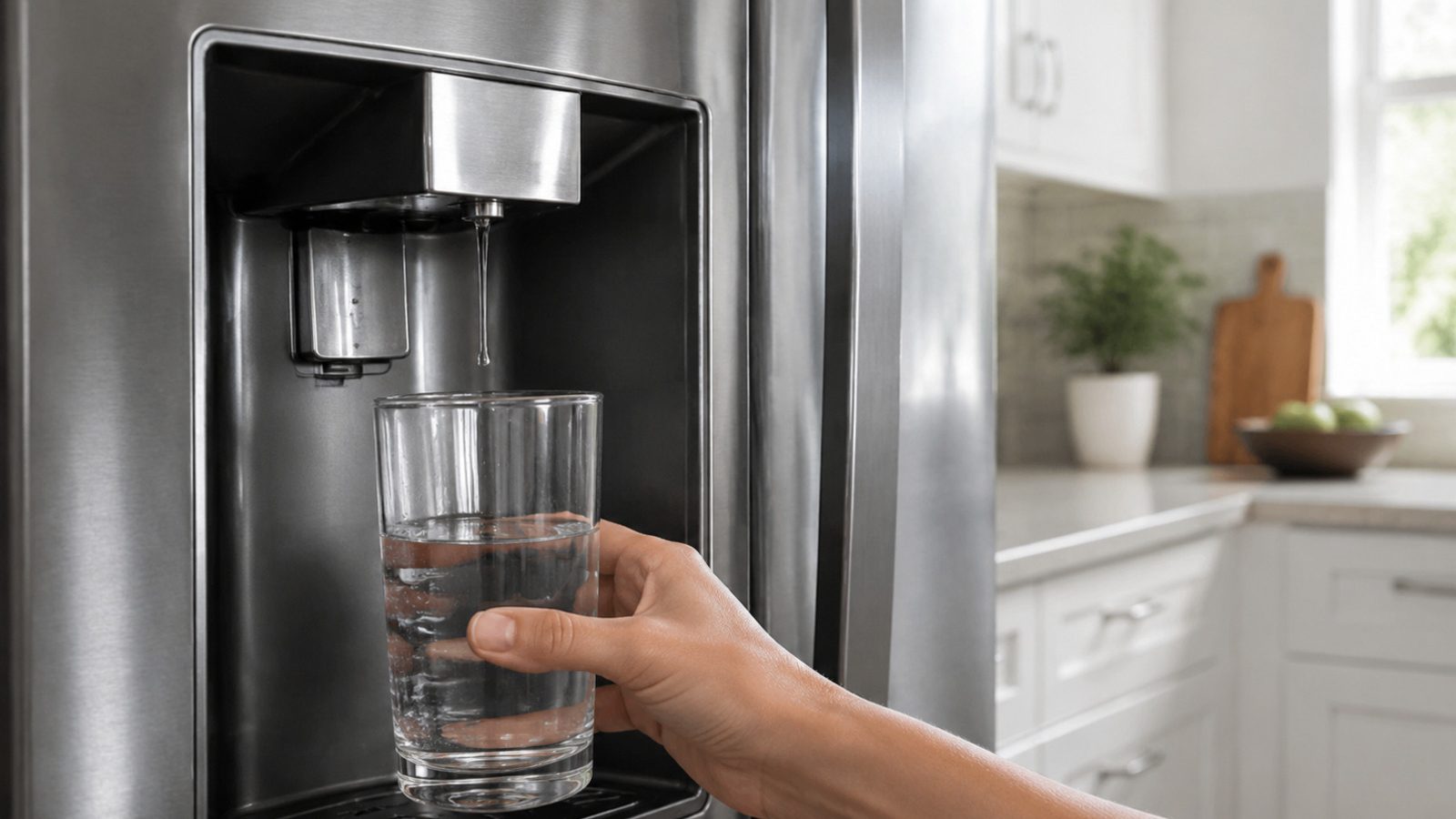
Internal water dispensers and ice makers add braided lines with fittings behind the unit. A weep that appears only when the icemaker fills implicates supply, not defrost.
Integrated installs can tilt slightly backward, preventing drain water from reaching the pan. Leveling is a legitimate fix when everything else is clean.
| Puddle cue | Probable source | Safe first step |
|---|---|---|
| After freezer door use | Clogged defrost drain | Note frost pattern; avoid poking liners |
| During icemaker fill | Supply line or fitting | Shut ice maker; watch next cycle |
| Front of fresh-food door | Gasket sweat or misalignment | Bill test on seal; wipe track |
Pull the toe-kick grille if accessible and look for staining on plastic drain paths—not at braided copper or valves you cannot reach safely.
If water contacts an electrical outlet behind the unit, shut breaker power before further inspection.
Safe to try
Leave to a technician
Entertaining season brings frequent door openings; condensate tracks along the mullion look like leaks but dry by afternoon. Persistent overnight pools do not.
Hard-water regions clog defrost drains with mineral grit over years—a column that never leaked suddenly weeps after a warm spell.
If the drain pan is dry yet the floor is wet, water may be arriving from an external line in the wall cavity—especially on combined ice-and-water columns.
We steam or flush defrost drains with tools sized for the tube, verify pan heat if equipped, and pressure-test water lines without kinking braided hoses.
Cabinet-aware techs coordinate small access openings rather than suggesting reckless pulls forward.
Water leaves a map. Read the timing and temperature of the puddle, protect your floors, and let a technician follow the path behind the panel where your hands should not go.
This article covers Water Under A Jennair with practical checks you can run before booking a technician.
Official manuals and support notes are available on JennAir owner support.
Remember: Water Under A Jennair is easier to resolve when you capture the model number and when Water Under A Jennair first appeared.
Write down the full model number before ordering parts. Board and sensor revisions can change which part number is correct.
A single power reset can clear a temporary fault, but repeated returns of the same code usually mean a physical cause remains.
Keep vents and filters clear between visits. Restricted airflow often mimics electrical or sensor failures.
If water, burning smells, or sparking are present, stop using the appliance and arrange a professional inspection.
No—supply lines and door seals are equally common on built-ins.
Unplug if water threatens outlets; otherwise shutting water may suffice for icemaker leaks.
Not directly on most columns—focus on drain and supply paths first.
Home policies vary; document with photos promptly regardless.
Warm sodas in a JennAir beverage center usually mean airflow, loading, or control issues—not a reason to overhaul a built-in bar column…
Continue readingWhen a JennAir wine column creeps warm or swings cold, stability—not brute force cooling—protects bottles and reveals the real fault.
Continue readingWhen a JennAir ventilation hood sounds powerful yet smoke lingers, filters, duct runs, and fan health—not button labels—deserve scrutiny.
Continue readingShare a few details and we’ll confirm an appointment. Prefer to talk? Call us and we’ll help right away.