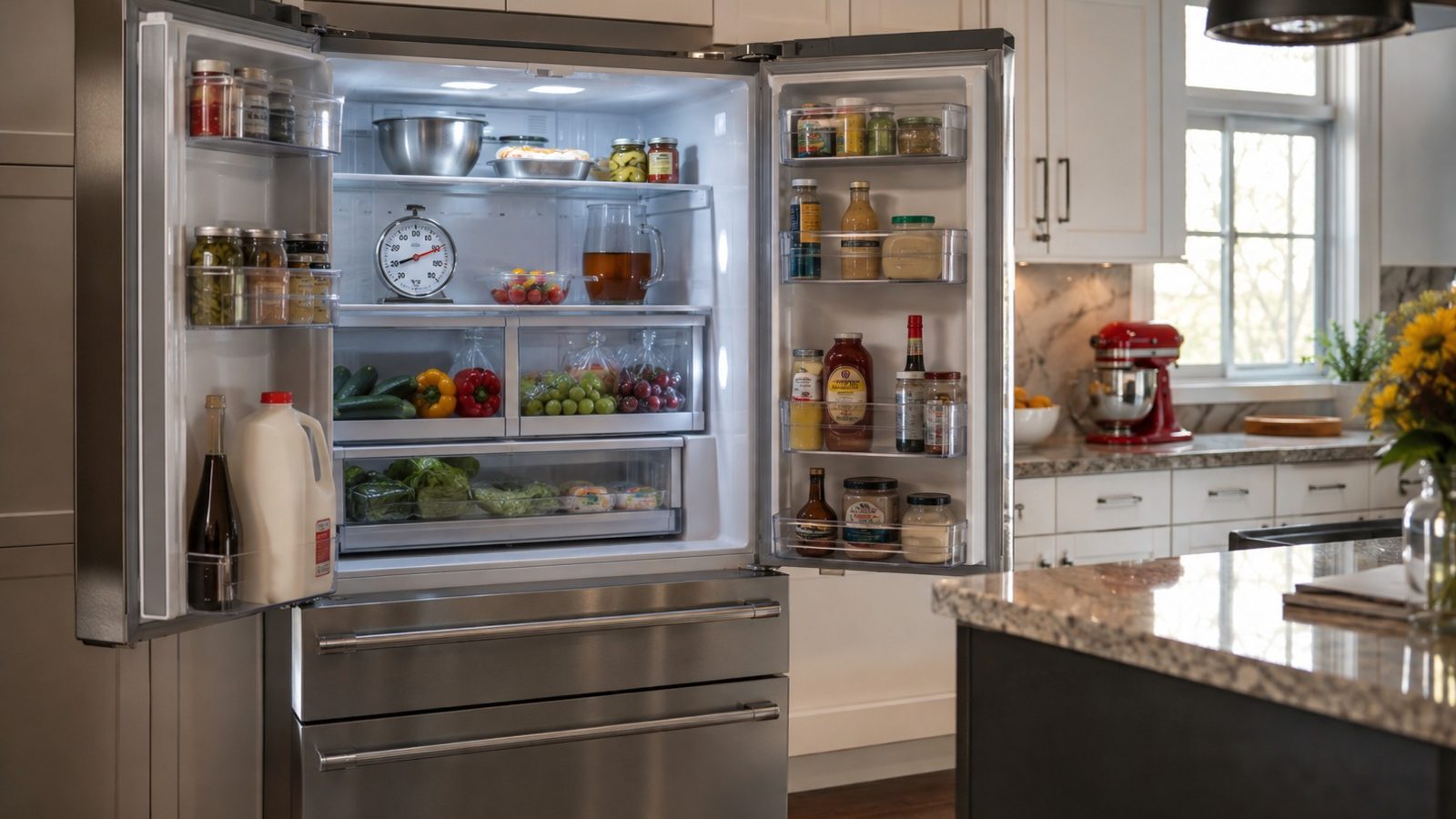

A JennAir column that drifts warm often traces to airflow, condenser loading, or a defrost that never finished—not always a sealed-system failure.
Column refrigerators disappear behind matching cabinetry, which makes cooling problems feel sudden: the exterior still looks flawless while yogurt softens inside.
Before assuming the worst, distinguish a full warm cavity from a warm refrigerator section with a still-cold freezer. That split is the compass for every safe check below.
Built-in units breathe through toe-kick and grille paths that custom panels can accidentally restrict. Warm room air around the condenser raises head pressure and slows recovery after door openings.
Automatic defrost relies on sensors and timers talking to the control board. When defrost stalls, frost blankets the evaporator and the fan moves little air—refrigerator temps rise first.
Door seal issues on heavy column doors show up as subtle gaps at the hinge side, not obvious puddles. A dollar-bill test along the gasket reveals weak contact.
| Symptom split | Likely direction | First safe look |
|---|---|---|
| Both sections warm | Power or compressor not running | Listen for fans; confirm breaker not tripped |
| Fridge warm, freezer cold | Evaporator airflow / defrost | Light frost on freezer back wall? |
| Warm spots on shelves | Door seal or overloading | Check gasket and vent clearance |
You should not pierce refrigerant lines or attempt compressor repair. Focus on air, cleanliness, and settings you can reach without tools beyond a flashlight.
If you hear clicking every few minutes with no sustained hum, note it—that rhythm helps a technician separate start-device issues from control faults.
Safe to try
Leave to a technician
After entertaining, a column left slightly ajar overnight produces warm fridge temps by morning—not a dead compressor. The control catches up once doors seal and coils breathe.
When both sections warm simultaneously after a power event, look upstream at the breaker and outlet before assuming appliance death.
Installers sometimes flush-mount toe-kick grilles too tightly. Leaving even a finger-width of intake gap can be the difference between recovery and constant running.
Technicians measure evaporator fan airflow, defrost heater amperage, and thermistor curves—not just box temperature. Sealed-system work stays licensed and contained.
We also verify panel clearance specs; a beautiful cabinet should not trade away condenser air.
A warm JennAir column is usually a conversation about air and timing. Start with the checks that keep your hands out of the sealed system, then call when the pattern repeats.
This article covers Built-In Jennair Refrigerator Running with practical checks you can run before booking a technician.
Official manuals and support notes are available on JennAir owner support.
Remember: Built-In Jennair Refrigerator Running is easier to resolve when you capture the model number and when Built-In Jennair Refrigerator Running first appeared.
Write down the full model number before ordering parts. Board and sensor revisions can change which part number is correct.
A single power reset can clear a temporary fault, but repeated returns of the same code usually mean a physical cause remains.
Keep vents and filters clear between visits. Restricted airflow often mimics electrical or sensor failures.
If water, burning smells, or sparking are present, stop using the appliance and arrange a professional inspection.
Often several hours; columns with thermal mass take longer than compact fridges.
Longer run times yes; never reaching setpoint is not normal.
Unlikely—partial warmth usually means airflow or defrost, not half power.
Depends on age, sealed-system health, and panel investment—we discuss options on visit.
Warm sodas in a JennAir beverage center usually mean airflow, loading, or control issues—not a reason to overhaul a built-in bar column…
Continue readingWhen a JennAir wine column creeps warm or swings cold, stability—not brute force cooling—protects bottles and reveals the real fault.
Continue readingWhen a JennAir ventilation hood sounds powerful yet smoke lingers, filters, duct runs, and fan health—not button labels—deserve scrutiny.
Continue readingShare a few details and we’ll confirm an appointment. Prefer to talk? Call us and we’ll help right away.